One call instead of ten No web forms, no callback spam 24/7 Emergency Response

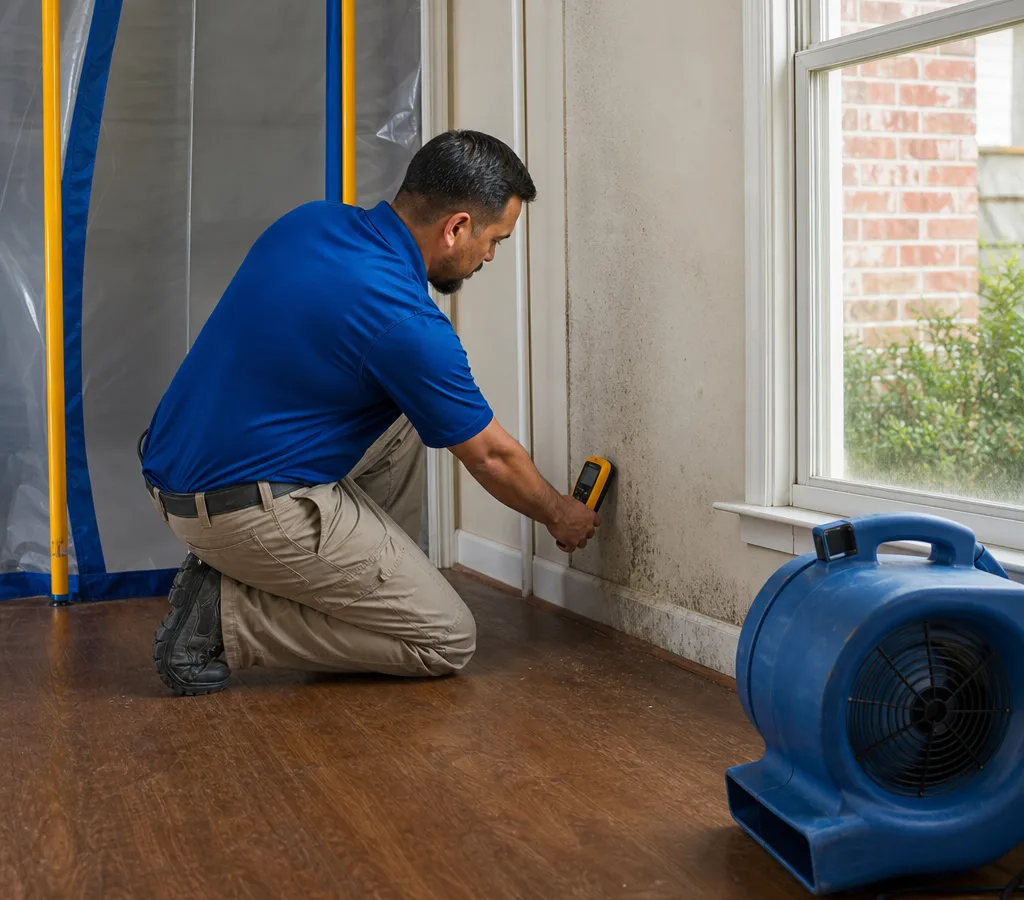
Technician inspecting a Houston home for recurring mold with a moisture meter near an exterior wall
Recurring mold treatment · Houston

Why Does Mold Keep Coming Back In Houston?

In Houston's humidity, mold returns when moisture and hidden spores are left behind. Get a clear plan to find the water source, remove contamination safely, and prevent repeat growth.

Moisture-source investigation Containment and air control Material-specific cleaning and removal Verified drying and prevention planning
Understanding repeat growth

The short answer: moisture stays, spores stay, or both

If you are searching “why does mold keep coming back Houston,” the most common reason is simple: the conditions that allowed mold to grow the first time are still present. In this area that usually means persistent humidity, a small leak that never fully dried, or a hidden damp cavity that was cleaned on the surface but not addressed behind it.

Mold does not need much. If building materials stay damp long enough, spores already present in indoor air can colonize again. Wiping visible spots, painting over staining, or running a fan for a day can make a room look better, but it does not remove contamination embedded in porous materials or fix the moisture driver.

Mold Treatment Houston focuses on stopping recurrence by pairing moisture diagnostics with proper containment, removal or cleaning, and verified drying. The goal is to leave you with a space that stays dry and stays clean, not just a surface that looks improved for a few weeks.

Request Emergency Service
Common recurrence drivers

Why mold keeps returning in Houston homes (what we see most)

Humidity and weak dehumidification

Houston's long stretches of high humidity can keep indoor relative humidity elevated, especially when HVAC is oversized, short-cycles, or the home has air leaks. That leaves closets, corners, and behind furniture damp enough for growth to restart.

A leak that is small but constant

Pinholes in supply lines, slow drain leaks, refrigerator ice-maker lines, and intermittent roof or window leaks can wet materials repeatedly without obvious puddles. Mold returns because the wetting never truly stopped.

Hidden moisture in wall or ceiling cavities

Mold often grows first on the back of drywall, inside insulation, or on framing where air does not move. Surface cleaning can miss the main colony if the affected cavity was never opened, dried, and cleaned correctly.

Incomplete removal of porous materials

Drywall, carpet pad, and some insulation can hold spores and hyphae. If contaminated porous materials are left in place, you can get the same musty odor and regrowth even after a visual cleanup.

Cross-contamination during cleanup

Without containment and filtration, disturbance can spread spores to adjacent rooms through the air system or foot traffic. Then the next humid spell or condensation event triggers new spots in a different area.

Condensation problems, not a plumbing issue

Cold supply lines sweating, poorly insulated ducts, and return-air leaks can create ongoing condensation. If the root cause is temperature and airflow, repairs need to address insulation, sealing, and moisture control together.

Request Emergency Service
Inspect beyond the visible stain

Where recurrence hides: common Houston hot spots

Recurring mold often shows up in the same places because the building physics are consistent. We routinely trace repeat growth to one of these patterns:

  • North-facing exterior walls and corners where air movement is low and surfaces stay cooler. In humid weather, cooler surfaces reach the dew point faster and can condense moisture.
  • Closets on exterior walls where packed storage blocks airflow. If the space stays warm and humid, materials never dry.
  • Behind vanities and around tub or shower surrounds where minor leaks, failing caulk, or damp backer materials can keep cavities wet.
  • Attic and ceiling transitions where ductwork, boots, or bath fans leak air. Humid air hitting cooler surfaces can condense and feed growth.
  • Laundry areas where dryer exhaust or washer connections create repeated moisture events.

In older parts of Houston with pier-and-beam homes, crawlspace humidity and airflow can also influence musty odors and recurrence. In newer, tighter construction, the driver is often indoor humidity management and condensation control. We can narrow the investigation to the specific moisture pattern in your home.

Request Emergency Service
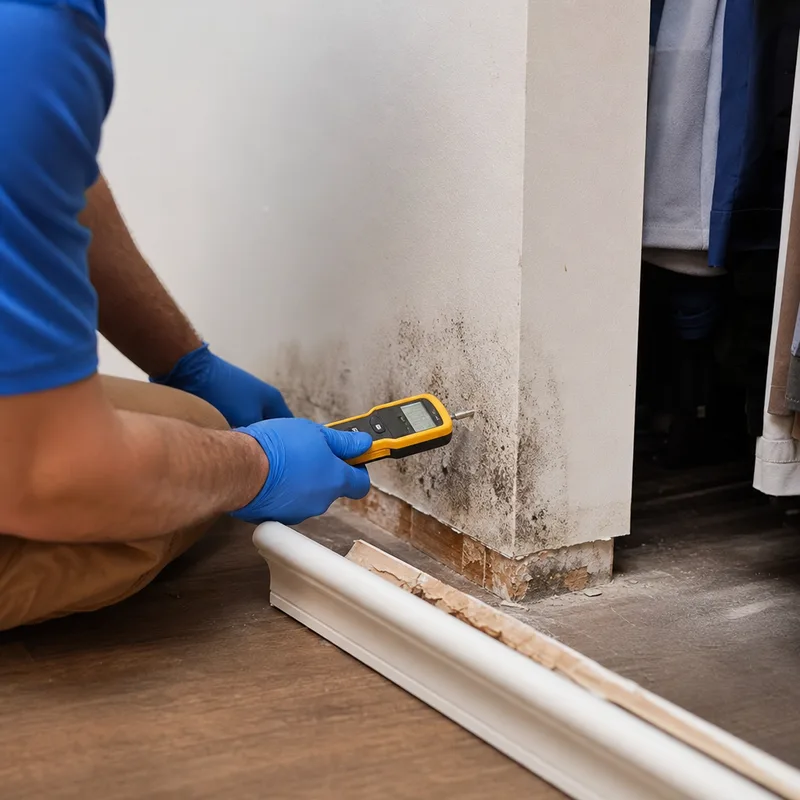
Moisture meter reading taken near recurring mold at a drywall corner with the baseboard removed
Root-cause treatment

How we stop mold from coming back (a practical, root-cause process)

01

Moisture investigation first

We start by identifying where water is coming from now, not where it came from last time. That can include moisture mapping of walls and floors, checking likely leak points, and looking for condensation patterns around HVAC and plumbing.

02

Containment and air control

If removal is needed, the work area is isolated to reduce spread to clean rooms. Air filtration and controlled airflow help keep disturbed particles from traveling through the home.

03

Remove or clean materials based on what they are

Non-porous and semi-porous materials can often be cleaned with the right methods; porous materials that are contaminated may need to be removed. The approach depends on what is affected and how deep growth goes.

04

Drying and dehumidification to stable conditions

Drying is not guesswork. We focus on getting materials and the space back to dry, stable conditions so mold cannot restart. If the source is humidity or condensation, we outline the control measures needed to keep it that way.

05

Verification and prevention plan

Before closing anything back up, we confirm the area is clean and dry enough to rebuild or reoccupy comfortably. You also get clear guidance on repairs, ventilation habits, HVAC settings, and storage spacing so the same pattern does not repeat.

Request Emergency Service
Recurring mold treatment pricing

How Much Does Recurring Mold Treatment Cost in Houston?

Recurring mold work in Houston typically runs about $750 to $3,500+ depending on how much material is affected and whether containment, demolition, and drying are needed. A small, accessible area with light growth may fall near the low end, while hidden contamination in walls or ceilings or multiple rooms pushes costs higher.

Price changes with the size of the affected area, what materials are contaminated, access, how much moisture control or drying is required, and whether the cause is a leak or condensation. The exact scope and cost are confirmed after an on-site inspection and moisture investigation.

Request Emergency Service

“We had the same musty smell come back twice after cleaning it ourselves. They found a slow leak inside the wall and explained why the stains kept returning. Once it was dried out and the affected drywall was handled correctly, it finally stopped coming back.”

Kara L.

“What helped most was the moisture testing and the plan for preventing condensation. The previous cleanup looked fine, but the humidity in that room was staying high. After the fixes, the spotting did not return.”

Miguel R.
Answers before treatment begins

Recurring mold in Houston: questions homeowners ask before scheduling

Why does mold keep coming back in Houston even after I clean it?

It keeps coming back because the underlying moisture problem was not solved or mold remained in porous or hidden materials. In Houston, high humidity and condensation can keep materials damp, and surface cleaning does not address growth behind drywall, in insulation, or under flooring.

Is it safe to paint over recurring mold spots?

Painting over recurring mold usually hides staining temporarily but does not fix moisture or remove contamination, so the problem often returns. Paint can also trap moisture in a wall system if the source is still active, which can make the affected cavity worse over time.

How do you tell if the mold is coming from a leak or humidity/condensation?

A leak typically produces localized, repeatable wetting near a specific fixture, supply line, drain, window, or roof entry point, while humidity or condensation shows up on cooler surfaces, corners, closets, and around HVAC components. Moisture mapping and targeted inspection help distinguish the pattern and point to the right fix.

Do I need containment if I only see a small patch?

Sometimes, yes. Containment depends on where the growth is, whether materials need to be disturbed, and how connected the area is to the rest of the home through return air paths and foot traffic. If removal involves cutting drywall or pulling insulation, containment and filtration are often the difference between a one-time fix and spread to new areas.

How long does it take to stop recurring mold?

Many single-area projects can be completed in 1 to 3 days once the moisture source is addressed, but hidden moisture, multiple rooms, or complex drying can extend the timeline. The schedule depends on access, how wet materials are, and whether building components need time to dry before repairs.

What can I do right now to reduce the chance of it returning before you arrive?

Keep the area dry and avoid disturbing the growth. If safe to do so, run your air conditioning to manage humidity, use a portable dehumidifier if you have one, and move furniture or stored items a few inches off the affected wall to improve airflow. Avoid bleach-heavy scrubbing that can spread spores and does not fix the moisture source.

Start with the moisture source

Stop the cycle of cleanup, odor, and regrowth

Share what you are seeing and where it keeps returning. We will trace the moisture source, explain what needs to be removed versus cleaned, and give you a clear plan to keep mold from coming back in your Houston home.