
Written findings you can act on
A clear summary of affected areas, moisture indicators, and contributing conditions, documented in a way that supports repair planning and decision-making.
Serving Houston, Texas & surrounding areas
24/7 Emergency Response
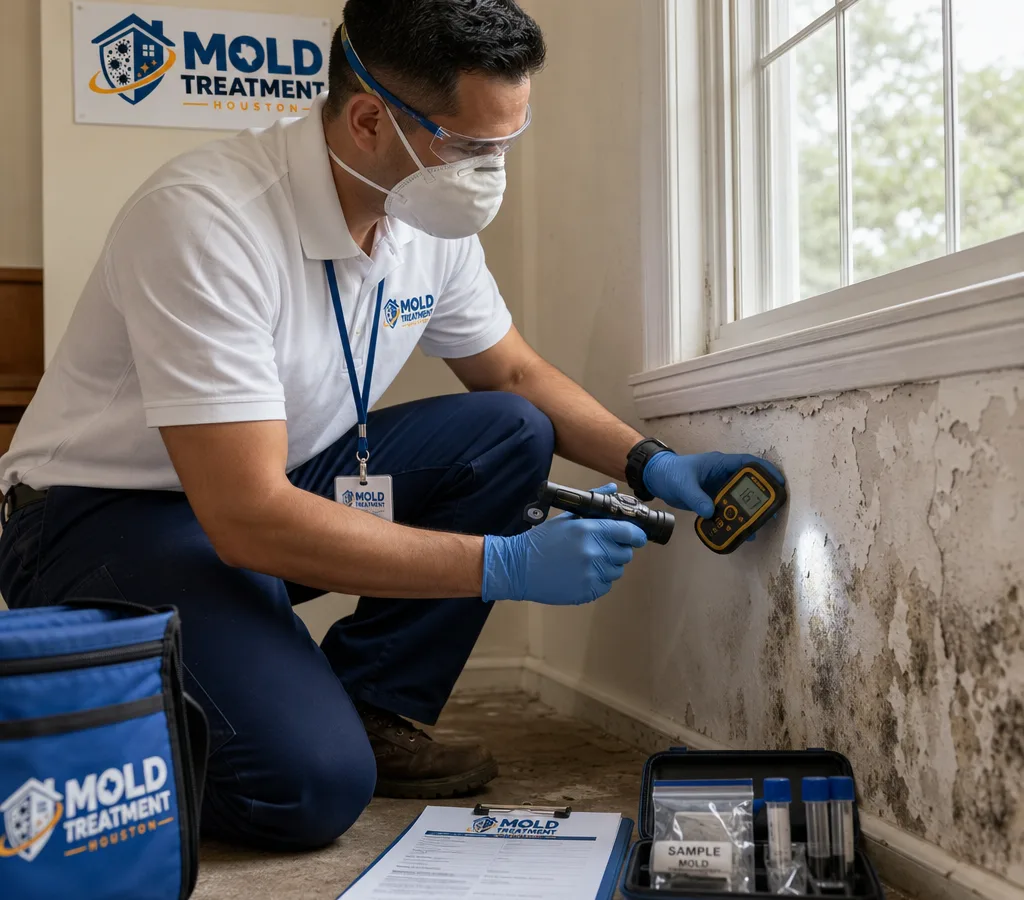
Get clear, science-based findings with a written report you can use for repairs, a landlord, or a real estate decision. Fast scheduling across Houston and straightforward next steps after the inspection.
Searching for mold inspectors Houston usually means you want two things: answers you can trust and a plan that makes sense for the building you are in. In Houston, high humidity, heavy rain events, and strong air conditioning use can all hide moisture problems behind walls, under flooring, or inside HVAC components. A proper mold inspection connects the dots between moisture, building materials, ventilation, and where growth can develop.
Our team at Mold Treatment Houston performs mold inspection Houston clients can use to make decisions, not guesses. The goal is a clear scope: where the suspected issue is, what conditions are supporting it, what samples—if any—are needed, and what to do next.
A good inspection is not a quick walk-through. It is a methodical look at building conditions, followed by documentation. You should leave the appointment understanding:
Houston housing varies a lot. A townhome near Washington Avenue, a 1970s ranch-style home in Westbury, and a newer build in Cypress can all present different moisture patterns. The inspection approach stays consistent, but the clues and likely pathways change with construction type and how the home is conditioned.
A defensible inspection combines visual assessment with moisture diagnostics. That means looking for water intrusion indicators and verifying conditions with tools, not assumptions.
Typical components of our mold inspection sciences approach include:
Sampling is not required for every job. If growth is visible and the moisture source is clear, the most useful outcome is often a written remediation plan and moisture correction guidance. When sampling is appropriate, the results should be interpreted in context, not treated as a pass/fail score.
If you are managing a broader indoor air concern, start with an inspection first. Many clients contact Mold Treatment Houston after a musty odor, a past leak, or a failed DIY cleanup because they want an independent, documented assessment before anyone starts removing materials.
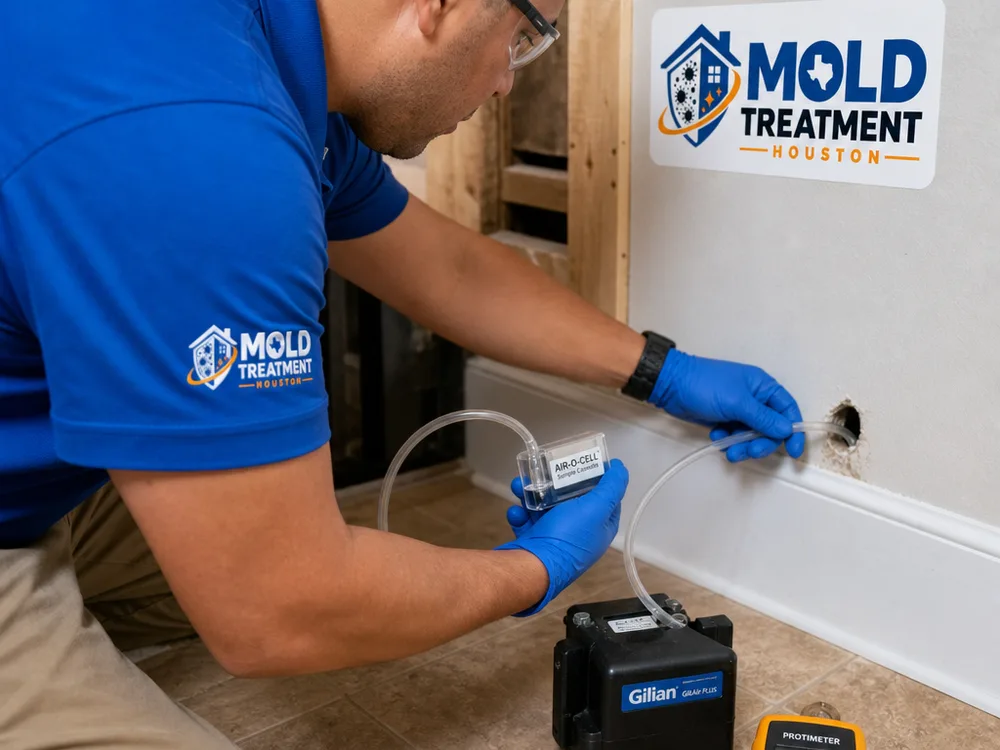
Sampling locations and methods are selected to answer a specific inspection question—not to create unnecessary lab data.
A clear summary of affected areas, moisture indicators, and contributing conditions, documented in a way that supports repair planning and decision-making.
Mold follows moisture. We focus on likely sources such as window intrusion, plumbing leaks, condensation, or elevated indoor humidity so the problem does not repeat.
Sampling is used when it will answer a real question: confirm suspected growth, compare an area of concern to a control area, or document transaction conditions.
You get practical direction on what to remove, what can often be cleaned, what containment typically looks like, and what should be fixed before rebuilding.
If the inspection is tied to a purchase, sale, or lease, we keep documentation clear and specific so parties understand what was observed and recommended.
Most mold inspection Houston appointments typically range from about $250 to $750, depending on the home size, number of areas to check, and whether sampling is needed. A basic inspection for one suspected area is usually at the lower end, while a larger home with multiple rooms, an attic or crawlspace check, and several samples can reach the upper end.
Final pricing changes with access, including tight attic areas or blocked closets, how much moisture mapping is required, the number and type of samples, and how quickly results are needed. Exact cost is confirmed when scheduling and again at the inspection based on the scope in the home.
You tell us what you are noticing—odor, visible growth, a past leak, recent flooding, or a buyer request. We confirm the property type and areas to prioritize.
We inspect concern areas and likely adjacent pathways, check for elevated moisture, and look for conditions that drive growth, such as condensation and ventilation issues.
If sampling is warranted, we choose locations and sample types based on the building layout and your goal, such as confirming suspected growth or documenting transaction conditions.
You receive written findings and practical recommendations. If remediation is needed, you also get scope guidance so repair and cleanup can be planned correctly.
Mold issues are rarely random. In Houston, the details that matter often come down to how moisture moves through the building and how the home is cooled.
Humidity and condensation: Long cooling seasons can lead to condensation at supply registers, around poorly insulated ducts, or at exterior walls when indoor air is kept very cold. We look for patterns and verify them with moisture readings rather than relying on surface appearance.
Storm-driven water intrusion: After heavy rain, water can enter around windows, roof penetrations, or exterior wall details, then appear days later as staining or swelling at baseboards. Older windows and roof details may produce subtle signatures until materials deteriorate.
Townhomes and shared walls: Attached construction can complicate moisture and airflow paths. An inspection should consider chaseways, party walls, and mechanical closets because odors and humidity can travel.
Older housing stock versus newer builds: Older homes may have different ventilation patterns, retrofits, and past repairs that create hidden cavities. Newer homes can still develop issues when drainage, HVAC sizing, or indoor humidity control is not balanced. We follow moisture first, then confirm what is present.
If your goal is verifying clearance after cleanup, that is a different scope than an initial investigation. A focused mold testing appointment may be the right fit because the question is narrower: whether spore levels and surfaces are consistent with the agreed cleanup criteria.
“We had a musty smell that got worse after a roof leak. The inspector mapped moisture in two rooms and explained why the staining was spreading along the baseboard line. The report made it easy to get the right repairs done without tearing out extra drywall.”
“I needed documentation before closing on a house. The inspection was thorough, the sampling plan made sense, and the write-up was clear enough to share with the seller and my contractor.”
Most inspections take about 60 to 120 minutes on site, depending on the home size and how many areas need moisture mapping. A single-room concern can be quicker, while multiple rooms plus attic or crawlspace access takes longer because readings and documentation need to be consistent.
You only need air sampling when it will change the decision you make next, such as documenting conditions for a real estate transaction or comparing a suspect area to a control area. If there is visible growth and a clear moisture source, moisture diagnostics and a written scope often provide more practical value than extra lab data.
Yes, and it is common in Houston because many people try to address a musty odor quickly. Cleanup products can change the surface appearance, so we lean more heavily on moisture readings, material condition, and inspection of adjacent cavities to determine whether a moisture problem is still present.
Make the concern areas accessible and avoid running air purifiers or ozone devices right before the appointment if sampling may be part of the scope. If you have photos of the area before any cleanup or after a leak, those can help connect timing to moisture conditions.
Yes. A good mold inspection ends with a clear description of likely affected materials, the suspected moisture source, and practical next steps for correction and cleanup. If you need a written plan a remediation crew can follow, we can outline containment considerations, removal boundaries, and what to verify after work is complete.
Yes. Many requests for mold inspectors Houston come from lease concerns and pre-purchase due diligence, where clear documentation matters. We keep the report specific to what was observed and measured at the property, with recommendations tied to moisture conditions and the building layout.
Scheduling depends on demand and the size of the inspection, but we prioritize time-sensitive situations like active leaks, recent flooding, or real estate deadlines. Share your timeline and the address area in Houston, and we will offer the soonest available window that matches the scope.
Tell us what you are seeing and where it is happening. We will schedule an inspection, document the conditions, and give you next-step guidance you can use with confidence.