
Clear scope before work starts
We walk the affected areas, look for likely moisture paths, and explain what will be removed, what can be cleaned, and what the next steps are for drying and repairs.
Serving Houston, Texas & surrounding areas
24/7 Emergency Response
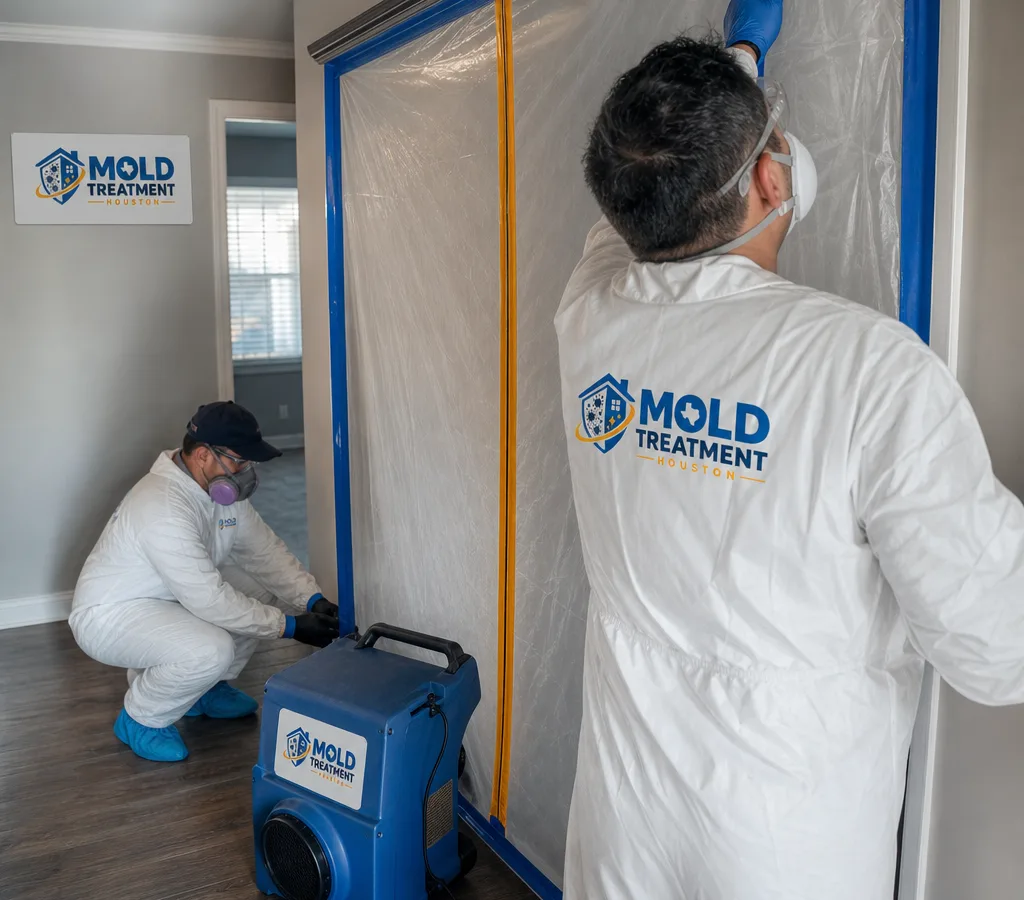
If you smell musty odors, see staining, or had a recent leak, our certified technicians contain the area, remove contaminated materials, and document the work so you can move forward with confidence.
Hiring a mold remediation company Houston property owners can trust is less about marketing and more about process. Mold cleanup fails when moisture is not addressed, the work area is not contained, or debris is handled like normal demolition.
At Mold Treatment Houston, we focus on three non-negotiables:
In Houston, humidity and storm-driven leaks can push small water problems into bigger mold problems fast. That is why the first step is always understanding what got wet, how long it stayed wet, and where air is moving through the home. Once we have a clear scope, we can schedule remediation quickly and keep the job organized from day one.
If you are researching providers, a quick gut-check is simple: you should hear clear talk about containment—plastic barriers and negative air—source moisture, and what gets removed versus cleaned. If a contractor only talks about spraying chemicals, keep looking.
We walk the affected areas, look for likely moisture paths, and explain what will be removed, what can be cleaned, and what the next steps are for drying and repairs.
We isolate the work zone with sealed barriers and use HEPA-filtered negative air machines so disturbed spores and dust are captured instead of redistributed.
After removal, we HEPA vacuum and clean remaining structural surfaces—framing, sheathing, and concrete—so the area is prepared for rebuild.
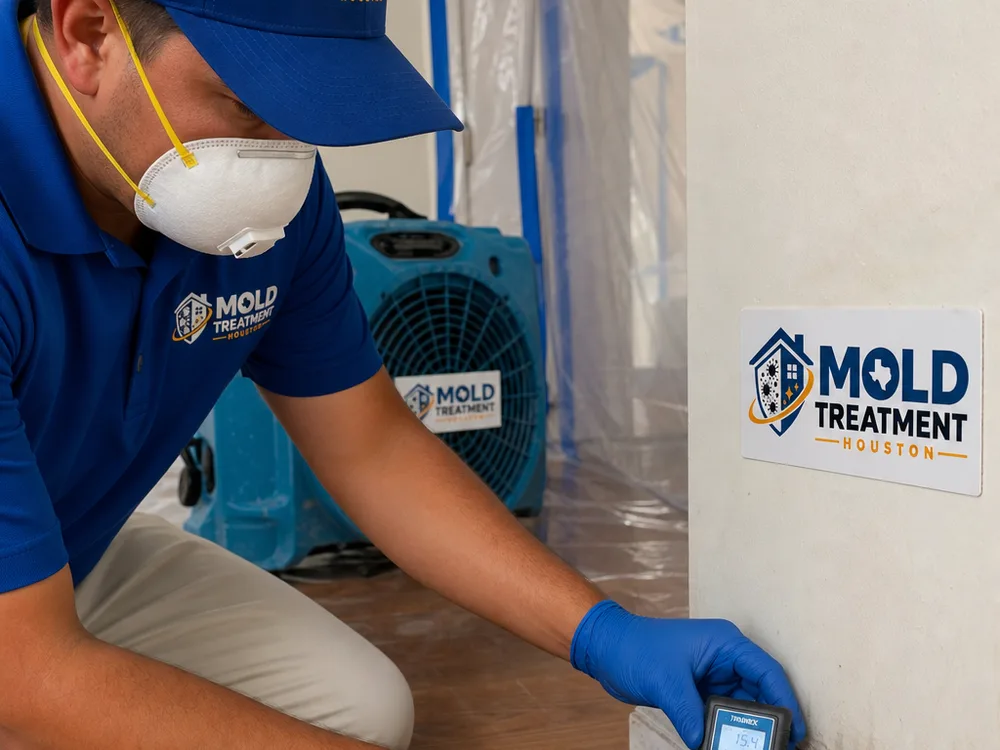
We check materials with moisture meters to help confirm conditions are trending dry, which reduces the chance of recurrence after repairs.
You get a written scope and basic photo documentation of key stages, which is helpful for property records and many insurance claims.
We protect floors, control debris paths, and keep equipment and waste handling organized so the rest of the home stays usable when possible.
Mold can start in any building, but the way it shows up around Houston has patterns. We build the plan around the building type and the moisture source, not a one-size checklist.
Common triggers we remediate:
Neighborhoods vary mainly by building style and renovation history. In The Heights and parts of Montrose, older homes and additions can hide older plumbing runs and mixed materials behind walls. Downtown and Midtown condos can have shared mechanical systems and tight chases where a small leak becomes a bigger cleanup. Energy Corridor and Westchase homes and apartments often have newer HVAC setups, but pan overflows and condensation issues still happen.
No matter where you are in the Houston area, the decision points are the same: how far the moisture traveled, whether insulation or drywall is involved, and how we can keep the rest of the home clean while we work.
We evaluate visible growth, musty odor areas, and likely moisture sources. We outline what surfaces are affected—drywall, wood framing, insulation, or flooring—and what access will be needed.
We build barriers, seal openings, and establish negative air with HEPA filtration. This keeps dust and spores from drifting into adjacent rooms and duct returns.
Contaminated porous materials that cannot be reliably cleaned, such as drywall and insulation, are carefully removed, bagged, and taken out through a controlled debris path.
We HEPA vacuum and clean remaining structural surfaces. Where appropriate, we use approved cleaning agents and abrasion methods to address staining on wood and masonry.
We coordinate drying needs and confirm moisture levels are dropping with meter readings. Dry conditions are a key part of preventing mold from returning after rebuild.
We review the work area with you, share photos of the key stages, and explain any rebuild readiness items so your contractor can close walls back up properly.
Most mold remediation projects in Houston typically range from about $1,500 to $6,500, with small, contained cleanups often landing around $1,500 to $3,000 and larger multi-room or attic projects commonly running $4,000 to $10,000+.
Your final price depends on the size of the affected area, whether drywall or insulation must be removed, how difficult access is, the level of containment required, and how much drying equipment time is needed. We confirm the exact scope and written price after an on-site inspection.
“We had a leak behind a laundry wall and started smelling mildew. They explained what had to come out, sealed the area off, and kept the rest of the house clean while they worked. The photos and notes helped a lot when we scheduled repairs.”
“The difference for us was the containment and the cleanup. It looked like a construction zone for a day, then it was actually clean again. They were straightforward about what they could and could not save.”
Scheduling depends on scope and current demand, but many jobs can start quickly once the affected area is identified and access is available. If you have an active leak or storm intrusion, prioritizing moisture control and safe containment is the first step before any demolition or cleaning begins.
Often you can stay in the home if the affected area can be fully contained and there is a separate path for debris removal, but some situations make temporary relocation safer or more comfortable. Large attic projects, multi-room removals, and work that affects primary HVAC returns can be disruptive, so we talk through occupancy during the inspection.
Sampling is not required for every job, and many projects can be scoped based on visible conditions and moisture evidence. If you need third-party testing for real estate, clearance, or peace of mind, that is best handled by an independent indoor environmental professional so results stay unbiased.
Clear access to the affected rooms, keep pets away from the work area, and avoid running fans that blow air from the contaminated space into clean areas. If the problem involves an HVAC closet or return, avoid running the system until we confirm containment so spores are not pulled through the ductwork.
Sometimes, yes. Non-porous and semi-porous structural components like framing can often be cleaned with HEPA vacuuming and appropriate surface treatment, but porous materials like drywall and insulation typically need removal when contaminated. The decision depends on how deep the growth is and whether the material can be accessed and cleaned thoroughly.
Coverage depends on what caused the water problem and how the policy is written. Many policies focus on sudden, accidental events, such as a burst supply line, and may limit or exclude long-term seepage, so documentation of the source and timeline matters. We can provide a written scope and photos that are commonly requested during claims.
Tell us what you are seeing and where it is happening in the home. Mold Treatment Houston will schedule an inspection, explain containment and removal options, and provide a written scope so you can make an informed decision.