
Written scope tied to what we can see
A good scope names the affected areas, the removal method—cleaning versus removal—the containment plan, and what happens to impacted building materials. You should never have to guess what is included.
Serving Houston, Texas & surrounding areas
24/7 Emergency Response
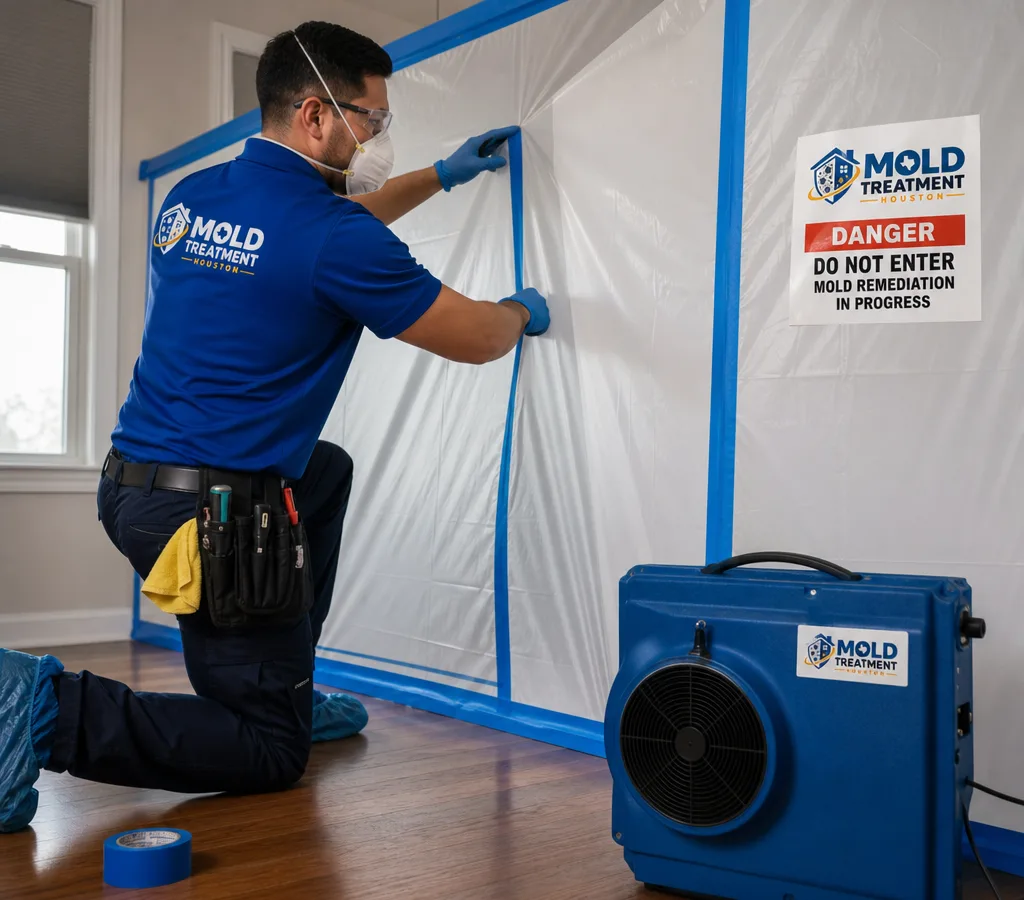
Get a clear inspection, a written scope, and containment-first cleanup that protects your home. Mold Treatment Houston serves Houston, TX with practical timelines and straightforward next steps.
When you search for mold remediation companies Houston homeowners can rely on, you are usually trying to solve two problems at once: stop the moisture that feeds growth, and remove contamination without spreading it to the rest of the house.
In Houston, high humidity and frequent heavy rain make these jobs time-sensitive. Homes near Buffalo Bayou and other low-lying areas can see water intrusion after storms, and even without flooding, HVAC systems running hard for long stretches can create condensation points around supply boots, registers, and inside closets on exterior walls. That combination is why the best decision is not picking the cheapest bid. It is picking a company that writes a tight scope, builds proper containment, and documents what was removed and how the air was managed.
Mold Treatment Houston approaches projects like a trade job that needs controls and verification. You get an on-site assessment, a plan you can review in plain language, and a remediation process designed to keep spores from migrating into adjacent rooms.
A good scope names the affected areas, the removal method—cleaning versus removal—the containment plan, and what happens to impacted building materials. You should never have to guess what is included.
Expect poly barriers, controlled entry, and HEPA-filtered negative air when the work area needs isolation. This is how you avoid cross-contamination into living areas.
Remediation does not last if the water issue stays. Common triggers in Houston homes include roof leaks, plumbing leaks, and HVAC condensation. The fix may be simple, but it must be identified.
HEPA filtration captures fine particulates. Proper cleaning steps matter as much as removal, especially around framing, subfloor, and adjacent surfaces.
Not everything needs to be thrown out, and not everything can be saved. A practical remediation company will explain what can be cleaned, what should be discarded, and how items are handled during work.
You should see bagging protocols, controlled debris transport, and photos or notes of what was removed. Documentation helps when you are coordinating repairs afterward.
Different parts of Houston housing stock create different remediation constraints.
In The Heights, you may see older homes with crawlspaces or pier-and-beam foundations where moisture management under the home becomes part of the conversation. In Montrose, mixed renovation histories can mean patched plumbing runs or older bathrooms where slow leaks hid behind tile or cabinetry. In Westchase and other areas with many multi-family buildings, shared walls and stacked plumbing can require tighter containment and coordination to prevent spread into adjacent units.
The plan changes based on where growth is found:
If you want to compare providers, ask each company to explain how they will prevent spore migration in your specific layout. The best mold remediation companies in Houston Texas can explain their containment choices in simple terms.
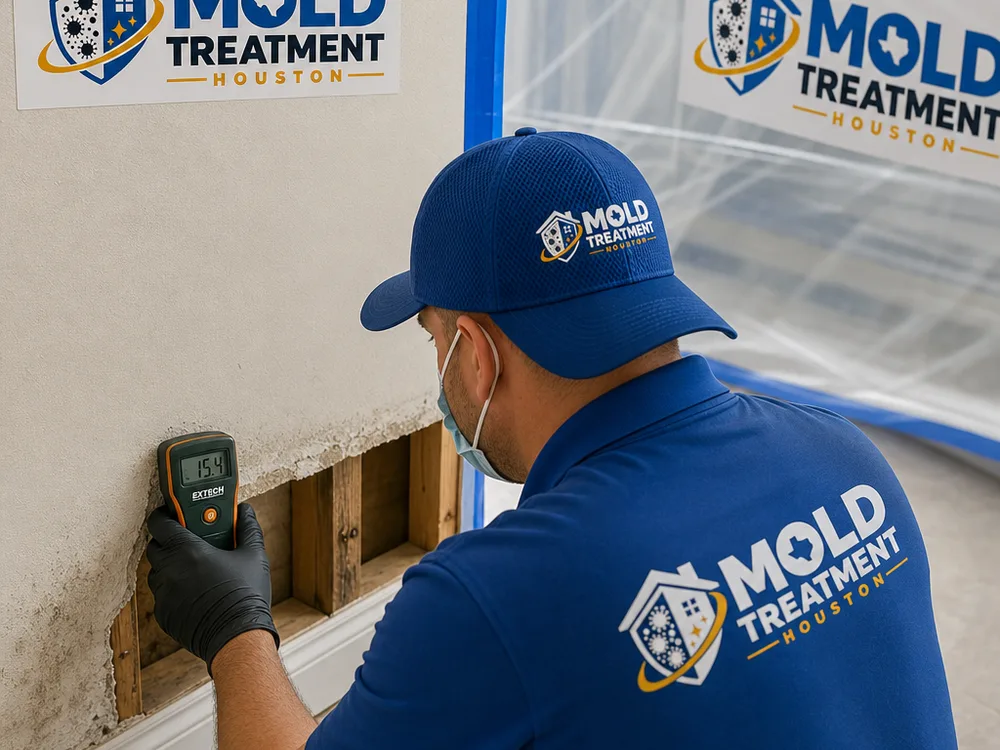
Moisture readings help define the affected area before controlled removal begins.
We look for visible growth, water staining, odor patterns, and moisture levels. The goal is to define the work area and identify likely sources like plumbing leaks, roof penetrations, or condensation points.
You receive a scope that lists affected areas, containment approach, removal versus cleaning decisions, and what materials are expected to be impacted. If there are unknowns behind walls, we explain how they are handled before anything expands.
We isolate the work zone with poly barriers and controlled entry, then use HEPA filtration and negative air when needed. This step is what separates professional remediation from a basic cleanup.
Impacted porous materials are removed when they cannot be reliably cleaned. Remaining framing and surfaces are cleaned using industry-standard methods, including HEPA vacuuming, damp wiping, and appropriate antimicrobial products when applicable to the material.
The area is brought back to a dry, stable condition so repairs can move forward. If you are coordinating a separate rebuild, the space should be left clean, contained, and ready for that next trade.
Most mold remediation projects in Houston typically range from about $1,500 to $6,000+, with small, contained areas sometimes falling closer to $800 to $1,500 and larger multi-room or wall and ceiling removals pushing higher. Price mainly follows how far contamination spread, whether drywall or insulation must be removed, and how complex containment and air control need to be.
Your final cost also depends on access—attics and tight crawlspaces take longer—how wet the materials still are, and whether contents handling is needed. The exact scope and price are confirmed after an on-site inspection and moisture assessment.
“They explained what had to come out versus what could be cleaned, and the containment setup looked like a real jobsite, not a quick spray-and-go. The written scope made it easy to coordinate the rebuild.”
“We had a musty smell coming back after storms. The inspection focused on moisture points first, then the remediation plan addressed the affected wall area without tearing up more than needed.”
If you are comparing mold remediation companies Houston TX residents hire, start with a written scope you can understand. Share what you are seeing, where it is, when it started, and any recent leaks so the inspection, containment, and cleanup plan can match your property.
Call for a EstimateThe best time to start is as soon as the moisture source is controlled and access is safe, because damp materials can deteriorate quickly in Houston's humidity. A reputable team will schedule an inspection first, then prioritize containment and drying so the problem does not spread while you wait on repairs.
Many remediation scopes focus on safe removal and cleaning, then leave the space ready for rebuild work like drywall, trim, or paint. During the inspection, ask what is included in the remediation scope versus what is considered reconstruction so you can plan timing and budget accurately.
Ask how they will build containment, whether they will use negative air with HEPA filtration, what materials they expect to remove, and how they will handle debris transport through the home. Also ask how they will identify the moisture source, because remediation without moisture control often leads to repeat problems.
Yes, but attic and crawlspace projects require careful access planning and dust control because disturbed insulation and debris can spread. A proper plan includes safe work platforms where needed, containment choices that fit the space, and HEPA-based cleaning methods suited to framing and sheathing.
If mold is in drywall cavities or insulation, opening the wall is often necessary because you cannot reliably clean porous materials hidden behind finished surfaces. A good remediation company will explain what exploratory cuts are needed, how they will limit openings, and how they will adjust the scope if conditions differ once opened.
Many residential jobs take 1 to 3 days of active work once the scope is set, but larger multi-room projects or areas that need extended drying can take longer. The timeline depends on the amount of removal, how wet the materials are, and whether the area is hard to access, such as an attic.
Tell us what you are seeing and where it is located. We will schedule an inspection, explain the containment approach, and provide a written scope so you can make a confident decision on which Houston remediation company to hire.