
Defined work area and containment plan
The estimate should spell out which rooms, how the area will be isolated, and what equipment will run during the job, including negative air and HEPA filtration where specified.
Serving Houston, Texas & surrounding areas
24/7 Emergency Response
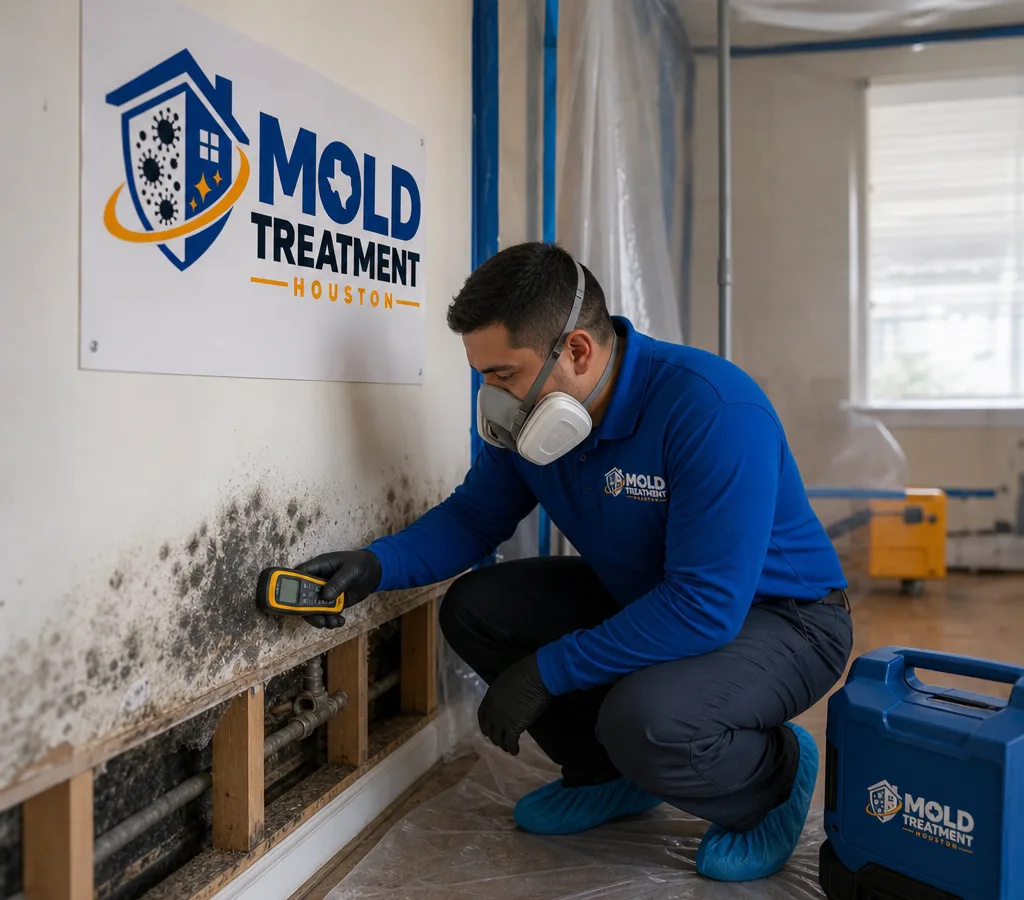
Get a clear, written scope and a realistic price range based on what is actually happening in your home, not a guess over the phone.
Mold remediation Houston cost typically ranges from about $1,000 to $6,000+ for residential projects, with small, contained areas often landing around $1,000 to $2,500 and larger or multi-room contamination commonly running $3,000 to $10,000+ when containment, demolition, and drying are needed.
Your final price depends on the size of the affected area, where the growth is—such as an attic, wall cavity, or crawlspace—how much removal and rebuild is required, whether HVAC components are involved, and how much moisture control and drying must be done first. We confirm the exact scope and cost after an on-site inspection and moisture assessment.
When people search mold remediation cost Houston, they usually want one simple number. The honest answer is that remediation is priced by scope. Two homes can both have “mold in the bathroom,” but one might be a small surface issue on drywall, and the other might be active growth behind the shower wall with wet framing.
A solid estimate breaks the job into clear line items. In most projects, cost comes from:
Houston jobs also swing based on how quickly moisture can be controlled. After storms and heavy rain, drying equipment availability and scheduling can change timelines, which can affect the overall project cost.
Some Houston areas see repeat moisture patterns that influence mold remediation pricing.
In older bungalows around the Heights, opening plaster or older drywall and working around original framing can add careful demolition time and more detailed containment. In newer townhomes near Washington Avenue, growth is often tied to small plumbing leaks inside wall cavities where the first visible sign is staining or odor, which can mean exploratory cuts to find the full extent.
In Westchase and other parts of west Houston with slab-on-grade construction, water intrusion at exterior walls after heavy rain can push remediation beyond a single room because wet baseboards and lower drywall can wick moisture. In larger homes around Memorial, attic and HVAC-related issues can expand the scope if insulation or ducting is affected.
These are not guarantees. They are examples of why a written scope matters: it ties the mold remediation Houston cost to measurable conditions such as material type, moisture readings, and the containment footprint.
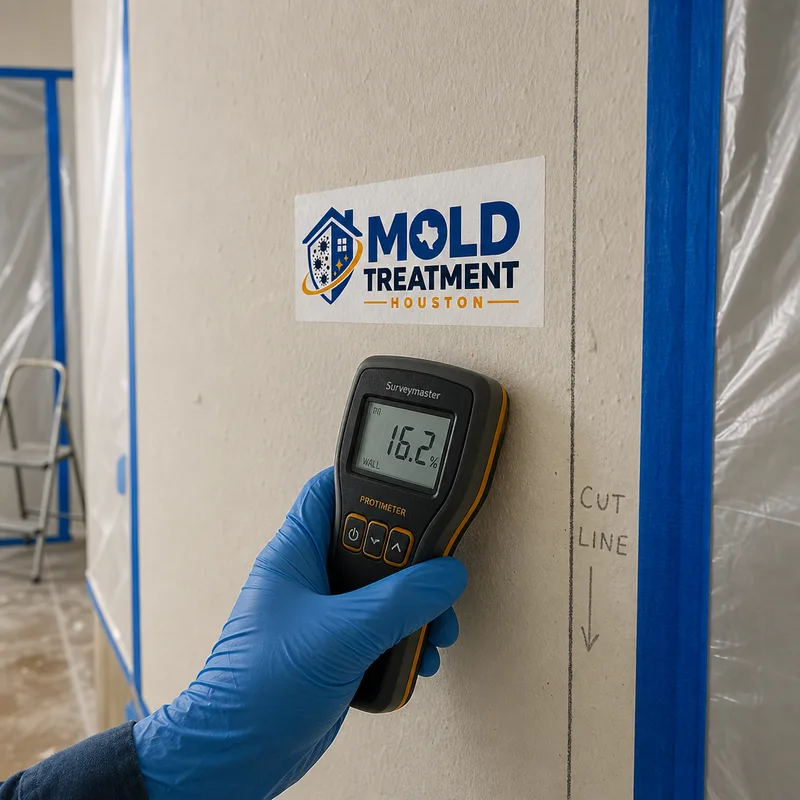
Moisture readings and a defined removal area connect remediation pricing to measurable site conditions.
The estimate should spell out which rooms, how the area will be isolated, and what equipment will run during the job, including negative air and HEPA filtration where specified.
Drywall, insulation, trim, cabinets, flooring, and contents should be called out so you can see what is being removed versus cleaned.
If materials are wet, the scope should include dehumidification or air movement and the criteria used to confirm drying before cavities are closed.
Look for HEPA vacuuming and damp wiping of remaining surfaces, plus an antimicrobial step where appropriate for the materials present.
Bagging, debris routes, and protection for floors and adjacent rooms should be described to keep spores and dust from spreading.
A good quote is upfront about what is not included, such as major reconstruction, plumber repairs, or independent clearance testing if you want it.
We look for the moisture source, map visible and suspected affected areas, and take moisture readings. This is where the scope gets defined, not guessed.
You get a scope that separates containment, removal, cleaning, drying, and recommended add-ons. When there are decision points, we lay out options by risk and cost.
We isolate the work area with poly barriers and run HEPA filtration so removal and cleaning stay controlled.
Contaminated porous materials are removed as needed. Remaining framing and surfaces are HEPA vacuumed and cleaned, then treated based on the substrate and condition.
If moisture is present, we dry the area and re-check readings. If you want independent clearance, we coordinate around that schedule before rebuilding starts.
“The estimate was broken down by containment, removal, and drying, so I could see exactly what was driving the price. They found wet drywall behind the vanity that we never would have guessed from the outside.”
“After a leak, I wanted the scope in writing before anyone started tearing things out. The crew kept the area sealed off and explained what could be cleaned versus what had to be removed.”
“What I appreciated most was the straight talk on cost. They didn't quote a low number and then add surprises once the containment was up.”
Costs can increase when wet materials require drying before or during remediation, and when multiple rooms show elevated moisture from intrusion. In Houston, projects often expand from a visible spot to adjacent areas once moisture mapping is done, which increases containment size, labor, and equipment time.
Both matter, but location often drives complexity more than raw square footage. Mold in a wall cavity, attic, or around HVAC components typically requires more containment, careful demolition, and access work than an open, easy-to-reach surface area.
A rough range is possible, but a reliable quote needs an on-site look. The price depends on moisture readings, what materials are affected, and whether the problem extends beyond what is visible, which is common with leaks behind walls.
It depends on the policy and what caused the moisture. Some claims are covered when mold results from a sudden, accidental water event, while long-term leaks or humidity issues may be excluded. Review your policy wording and use a written remediation scope to document what was found and proposed.
Not always. If the affected area can be contained and living spaces remain separated with proper filtration, many homeowners stay put. If work involves major demolition, multiple rooms, or disrupted HVAC operation, a short relocation can be safer and more comfortable.
They might reduce cost only when the issue is truly limited to a cleanable surface and the moisture source is solved. Bleach is not a substitute for removing contaminated porous materials or cleaning settled particles, and a partial DIY attempt can increase cost if it spreads contamination or delays drying.
Scheduling depends on scope and current demand, but many projects can begin quickly once the inspection is complete. A small, contained remediation may take 1 to 2 days, while larger jobs that include drying and removal across multiple areas can take several days plus any rebuild time.
Do not disturb visible growth and avoid running fans that blow directly across the affected area. If it is safe, note when the problem started and any recent leaks, and clear access to suspected areas so we can check behind sinks, around HVAC closets, and along exterior walls.
If you are comparing quotes, ask for a scope that shows containment size, what materials are being removed, and how drying will be verified. A clear scope makes prices comparable and protects you from partial fixes.
Call for a EstimateMold Treatment Houston serves Houston, TX 77007 with inspection-based pricing that matches the conditions on site. Share what you are seeing and where it is, and we will outline the next steps and what drives cost for your specific situation.