
A written scope before work begins
We outline where the issue is, what gets removed or cleaned, what gets dried, and what the jobsite will look like during containment so you can make an informed decision.
Serving Houston, Texas & surrounding areas
24/7 Emergency Response
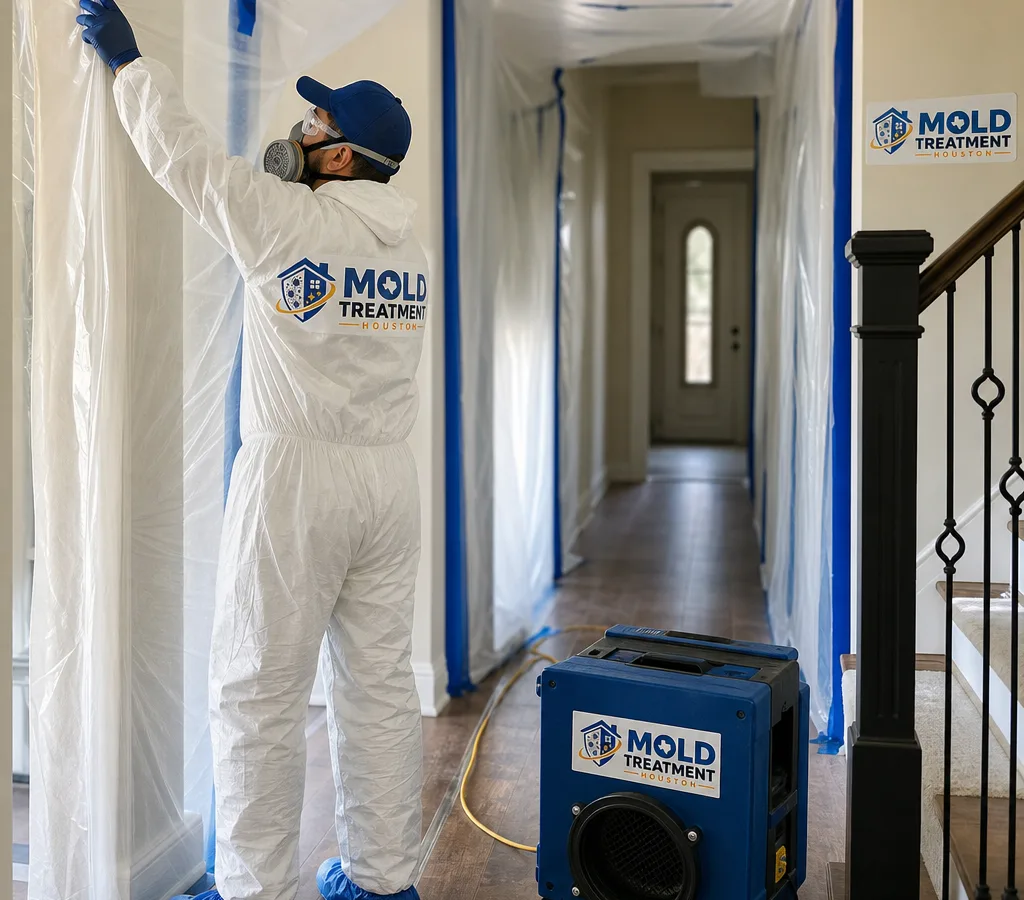
If you smell musty odors, see staining, or have had a leak or flood, we inspect, contain, remove, and restore with a written plan you can understand and documentation you can keep.
When people search for mold remediation Houston, they are usually dealing with one of two situations: a visible patch that keeps coming back, or a water event (roof leak, plumbing break, HVAC drain issue, flooding) that left hidden moisture behind walls or under flooring. Either way, the goal is the same. Stop the moisture source, prevent spread, remove contaminated materials safely, and dry the structure so the problem does not restart.
Mold Treatment Houston handles mold remediation with a jobsite-first mindset. We start with an inspection to figure out where growth is active and where moisture is feeding it. Then we build a scope that matches the actual conditions, not a generic package. You get clear steps, realistic timelines, and a plan for restoring the area once remediation is complete.
Houston's humidity and frequent heavy rain make speed and drying discipline matter. Mold can grow on many common building materials once they stay damp long enough, including drywall paper, wood framing, insulation, and the backing of some floor coverings. A proper remediation is less about chemicals and more about containment, controlled removal, HEPA filtration, and verified drying.
If you want background on who we are and how we work across the metro, Mold Treatment Houston keeps things simple: clear communication, careful work areas, and practical next steps.
We outline where the issue is, what gets removed or cleaned, what gets dried, and what the jobsite will look like during containment so you can make an informed decision.
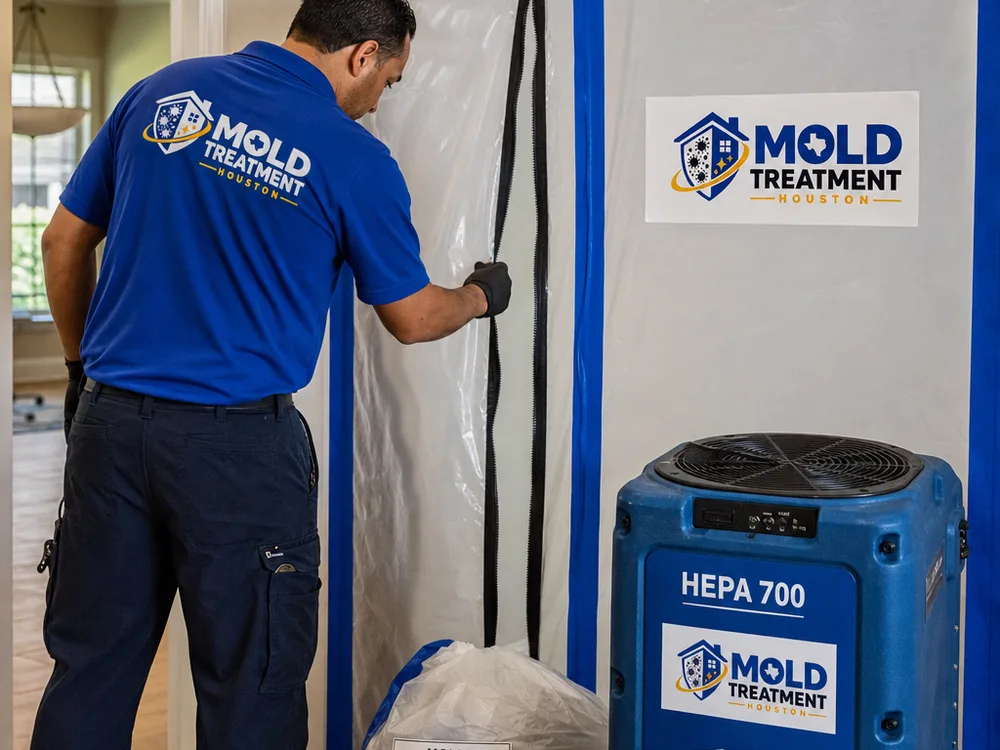
We use plastic barriers, negative air when appropriate, and HEPA filtration to reduce cross-contamination to adjacent rooms, closets, and HVAC returns.
When materials are compromised, they are removed and bagged out. Cleaning focuses on hard surfaces using HEPA vacuuming and damp wiping with appropriate antimicrobials.
We track moisture using meters and adjust dehumidification and airflow. Drying is what prevents a repeat when humidity climbs again.
We can provide photos and notes of the work area, what was removed, and what drying steps were taken so you have a record for property files or insurance discussions.
A real remediation follows the same core principles used across the industry.
First, we identify the moisture driver. If the source is still active, cleaning is temporary. Common Houston culprits include slow plumbing leaks under sinks, water intrusion at windows or roofs after storms, and HVAC condensate problems (drain clogs, pan overflows, or poorly draining lines).
Next, we set containment to keep spores and dust from migrating. For a small, isolated area, containment may be localized. For larger or active growth, we may isolate a room or create a contained work zone with negative air.
Then we remediate. Porous materials that cannot be reliably cleaned (often drywall, insulation, some ceiling tiles, and carpet pad) usually require removal. Semi-porous or hard materials are cleaned with HEPA vacuuming and wipe-down methods.
Finally, we dry and verify. Drying is targeted to what got wet: wall cavities, subfloors, framing, and air spaces. We use dehumidifiers and air movers as needed, and we check moisture levels so the rebuild phase makes sense.
Local note: homes around The Heights and other areas with older framing and layered renovations can have multiple wall assemblies and hidden cavities. That makes careful inspection and targeted openings important, so we do not miss wet materials behind the visible surface.
We look for visible growth, water staining, and musty odors, then check likely moisture paths. If needed, we use non-invasive meters and targeted openings to confirm conditions in cavities.
You receive a clear work plan: what areas are included, what gets removed versus cleaned, and how we will protect unaffected spaces. We also discuss occupant considerations, especially for sensitive households.
We isolate the work area with plastic barriers and run HEPA air filtration. For larger or higher-risk projects, negative air helps keep airborne particles moving toward filtration instead of into the home.
We remove damaged porous materials, clean remaining structural components, and apply appropriate antimicrobial steps. If another trade is needed to fix the moisture source, we coordinate timing so remediation is not undermined.
We dry to appropriate moisture levels for the material type and provide photos and notes from the job. If you are arranging third-party clearance testing, we leave the area in a condition that supports it.
Mold remediation in Houston typically ranges from about $1,000 to $6,000+, with small, contained areas often closer to the low end and larger multi-room or wall-cavity projects higher. Projects that include demolition of drywall or flooring, extensive drying equipment, or multiple affected areas usually cost more.
Final pricing depends on the square footage and materials affected, how far the growth extends into cavities, accessibility (attics, tight crawl spaces), the level of containment and air control needed, and whether the moisture source has been corrected. The exact cost is confirmed after an on-site inspection and a written scope.
“We had a musty smell after a slow leak behind the laundry wall. The crew explained the containment, removed the damaged drywall and insulation, and documented everything with photos. The drying equipment was loud but they kept it tidy and the odor was gone when the area was rebuilt.”
“After a storm, we found growth in a closet that shares an exterior wall. They traced the moisture path, set up a sealed work area, and didn't spread dust through the house. The written scope matched what actually happened on site.”
“What I appreciated most was the clear plan. No mystery steps. They walked me through what could be cleaned versus what had to be removed, and why.”
If you are comparing mold remediation Houston heroes reviews, focus on specifics: did the company explain containment, identify the moisture source, and leave documentation? We will.
Call for a EstimateThe right time to start is as soon as the moisture source is stopped and the affected area can be safely accessed. In Houston's humid conditions, delays can allow damp building materials to worsen, so an inspection and drying plan are often the first priority, followed by containment and removal where needed.
Yes, as long as the moisture driver is identified and addressed. Attics may involve roof leaks or ventilation and condensation issues, while HVAC-related mold often ties back to condensate drainage problems or wet insulation near supply/return areas; remediation focuses on safe access, containment, and cleaning or removal of affected materials.
If mold is on or inside porous materials like drywall, insulation, or carpet pad, removal is commonly required because those materials are difficult to clean reliably. We aim for targeted demolition based on where moisture and growth are confirmed, so the repair scope stays as small as practical.
Many projects can be completed while occupants remain elsewhere in the home, but it depends on the size and location of the work area and any sensitivities in the household. We explain containment, airflow control, and what areas to avoid so you can make a safe choice for your situation.
We can leave the area prepared for third-party clearance testing if you want independent verification. If you already have an indoor air quality professional involved, we coordinate timing so testing occurs after remediation and drying steps are complete.
Look for reviews that describe the process, not just the outcome: containment setup, how debris was handled, whether the moisture source was discussed, how drying was managed, and whether the customer received documentation. Those details are the best clues that the work was controlled and repeat issues were considered.
Tell us what you are seeing (or smelling) and where it started. We will schedule an on-site inspection in Houston, explain what we find, and provide a written scope that fits the condition of your home.