
Moisture-source focused
We look for the condition that allows mold to grow. Without identifying the moisture source, cleanup often turns into repeat work.
Serving Houston, Texas & surrounding areas
24/7 Emergency Response
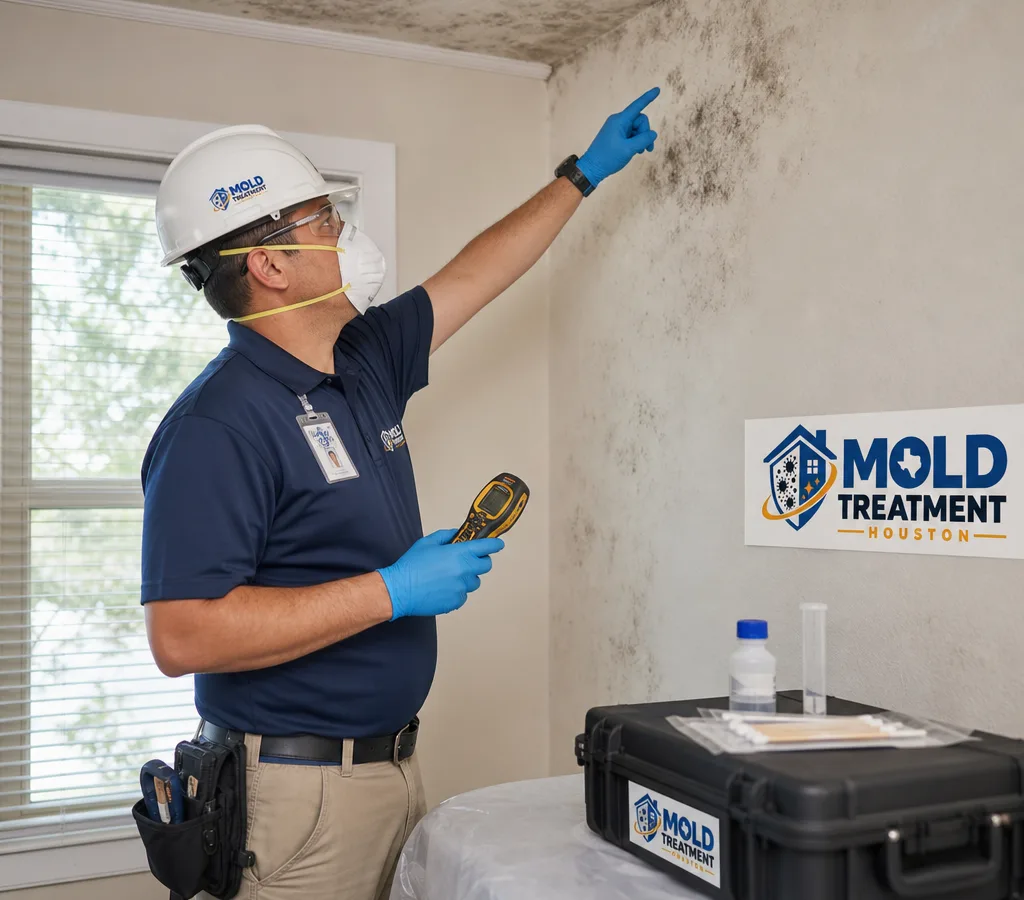
Get clear, certified testing and a written report that points to the moisture source, maps where mold is likely growing, and outlines practical next steps for your home or property.
If you are searching for Houston mold inspection services, you are usually dealing with one of three problems: a recent leak, persistent humidity, or a musty odor that will not go away. In Houston, moisture can linger because of the Gulf Coast climate, and that can turn a small plumbing or roof issue into hidden growth behind drywall, under flooring, or inside HVAC returns.
Mold Treatment Houston provides mold inspections and certified testing designed to answer the questions that matter: Where is the moisture coming from? Is there likely growth in building cavities? What type of sampling is appropriate? What do the results mean for cleanup and repairs? You will get findings you can use, written clearly for homeowners, buyers and sellers, property managers, and landlords.
Many clients start by describing symptoms such as odor, staining, or allergy-like irritation. Our job is to verify conditions with tools and evidence, document what we find, and recommend a rational path forward. Mold Treatment Houston focuses on straightforward communication and documented results so you can make decisions with confidence.
A proper inspection is more than a quick look around. Our Houston mold inspection services typically include:
For real estate transactions, documentation can distinguish a past issue from active moisture. In neighborhoods with older construction such as The Heights, renovations and window assemblies may require extra attention. In newer builds around EaDo, tight envelopes, heavy air-conditioning use, humidity control, and condensate management can become part of the inspection.
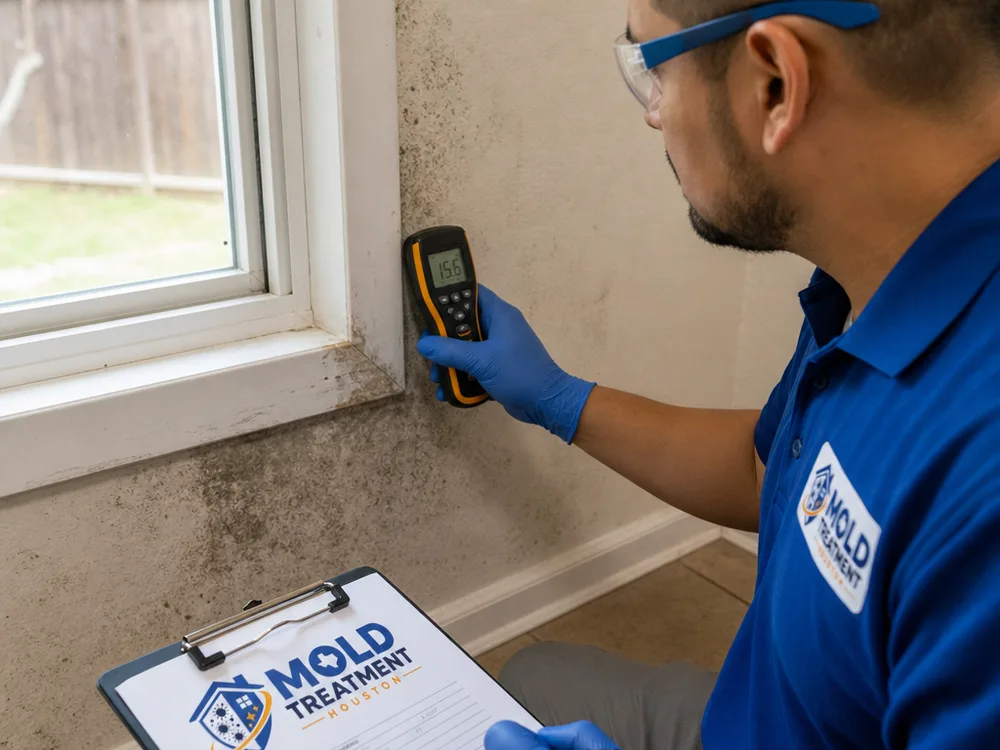
Moisture readings connect visible clues to specific materials and locations, creating a clearer basis for testing and repairs.
We look for the condition that allows mold to grow. Without identifying the moisture source, cleanup often turns into repeat work.
You get a report that ties observations to specific locations, so remediation and repairs can be scoped correctly.
Air and surface samples are used when they help answer your question, not as a default add-on.
Results are explained in plain language, with guidance on what to do immediately and what can wait.
We can help document conditions for tenant concerns, turnovers, and maintenance planning while keeping the process orderly.
We start by understanding what prompted the inspection: a leak, visible staining, odor, recent remediation, or a pre-purchase concern. Photos and prior repair notes help.
We inspect areas of concern and likely moisture pathways. In places like Montrose, where older homes may have varied renovations, we pay attention to additions, modified bathrooms, older window assemblies, and other transitions where moisture can collect.
We use moisture meters and, when useful, thermal imaging to narrow suspect zones. We also consider ventilation and HVAC behavior because indoor humidity control is a common driver in Houston.
If testing is needed, we take the right type of sample for the scenario. Samples are labeled and documented so results are traceable to the location and method used.
You receive a written summary of observations and test results, plus recommended actions such as targeted drying, further investigation, or a defined remediation scope.
Houston mold inspection services typically range from about $250 to $700 for a standard residential visit with a written report, with pricing moving higher when multiple samples, larger square footage, or complex access is involved. A basic visual inspection with moisture checks is often on the lower end, while inspections that include several air and/or surface samples and expanded documentation tend to land on the higher end.
Your final price depends on the size of the property, how many areas need to be checked, sampling type and quantity, attic or crawlspace access, and whether prior water damage requires extra investigation. Exact costs are confirmed after we understand the property and the goal of the inspection.
Houston inspections tend to be moisture investigations as much as they are mold investigations. High humidity, heavy air conditioning use, and sudden water intrusion events can all change what we look for and how we test.
In areas near Buffalo Bayou and other low-lying spots, properties may experience periodic moisture challenges during major rain events. That does not automatically mean mold is present, but it does raise the importance of checking building materials for elevated moisture and looking for hidden impact behind baseboards and in wall cavities.
Condominiums and townhomes near Downtown often share walls and mechanical chases, which can move odors and moisture between units. In those situations, we document where indicators are strongest and recommend effective follow-up, which may include coordinating access to adjacent areas.
If the concern is tied to HVAC behavior, condensate management and return-side leakage can matter. We commonly inspect around supply and return registers, accessible return cavities, and the air-handler area for staining or elevated moisture readings. When findings point to a mechanical issue, many owners pair the report with an HVAC evaluation. Moisture-related fixes and mold remediation services can follow once the scope is clear.
Book Your Inspection“We had a musty smell that kept coming back after a plumbing leak. The inspection mapped out moisture behind the baseboards and explained which rooms needed testing. The report made it easy to talk to our plumber and plan the next steps.”
“During a pre-purchase inspection, they found elevated moisture near a window wall and suggested targeted sampling. The written findings were clear enough to use in negotiations and to plan repairs after closing.”
Scheduling depends on current demand, but many inspections can be set up within a few days, with faster appointments sometimes available when you are dealing with an active leak or a real estate deadline. The best way to speed things up is to share the address, the areas of concern, and whether access to attic spaces, closets, or mechanical rooms is available.
A visual inspection with moisture mapping is often enough when there is obvious growth and the goal is to identify extent and the moisture source, but testing helps when you need documentation, when growth is suspected in hidden areas, or when symptoms are present without visible indicators. In Houston, testing is also commonly used to establish a baseline after a leak or to support a defined remediation scope.
Keep the areas accessible and avoid heavy cleaning, repainting, or running ozone or fogging products right before the visit because those actions can mask indicators and affect sampling. If possible, gather any notes on past leaks, roof repairs, plumbing work, or prior remediation so we can focus the inspection on likely pathways.
We can identify strong indicators of hidden moisture using non-invasive meters and thermal imaging, and we can recommend targeted openings when confirmation is needed. Physical openings are handled carefully and typically require owner approval and coordination, especially in finished spaces.
Yes. A written inspection report with locations checked, observations, moisture readings, and any test results is often useful for documenting conditions and planning maintenance. For multi-unit properties, we also note factors like shared walls, ventilation pathways, and where odors appear strongest to guide practical follow-up.
If mold is confirmed or strongly suspected, the next step is usually to stop the moisture source, define the affected materials, and plan containment and removal based on the extent and location. Your report will outline the recommended next actions so you can get accurate pricing and avoid incomplete cleanup.
Share what you are seeing—odor, staining, a past leak, or a real estate deadline—and we will recommend the right type of inspection and testing for your Houston property, then document results in a report you can act on.