
A sampling plan, not random test points
We choose locations based on symptoms, moisture history, and airflow patterns, then compare indoor results to an outdoor baseline.
Serving Houston, Texas & surrounding areas
24/7 Emergency Response
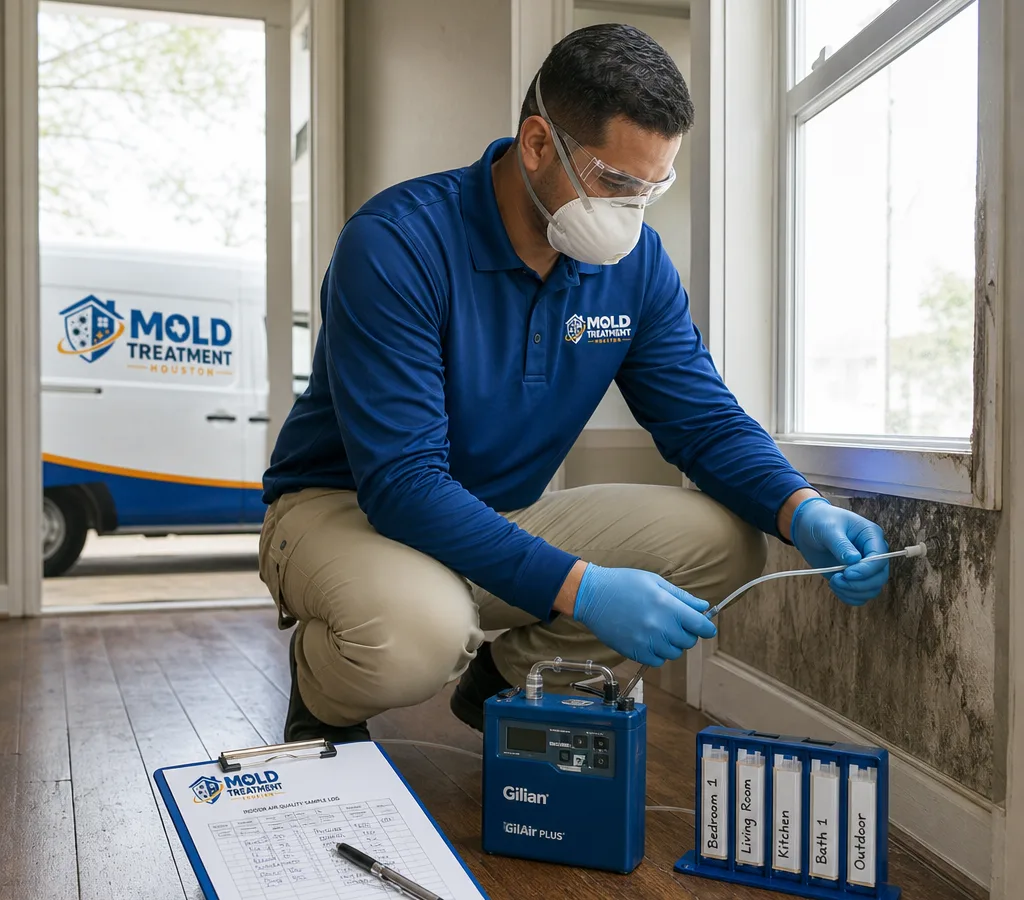
Get clear answers fast with professional sampling, lab analysis, and a plain-English report you can use to plan next steps for your home or workplace.
If you are searching for mold testing Houston, you are usually dealing with one of three things: a persistent musty odor, visible spotting that keeps coming back, or water damage from a leak or condensation. In Houston's humidity, building materials can stay damp longer than you expect, and that can turn a small moisture problem into a larger indoor air quality concern.
Mold testing answers practical questions: Is there elevated mold in the air? Which areas are most affected? Does the sample point to a moisture-driven source? A good test does not rely on a single quick reading. It uses a plan, compares indoor results to an outdoor baseline, documents conditions, and ties the findings to what we actually see on site.
Mold Treatment Houston handles residential and commercial testing in Houston, including properties near the Post Oak area where you have a mix of high-rise offices, multifamily buildings, and older homes that may have had past plumbing or roof leaks. If you want a straightforward inspection and a report you can hand to a property manager, contractor, or insurer, we can help.
To understand who you are working with as a company, you can review Mold Treatment Houston for general information about our team and service area.
Most clients want two things: reliable sampling and a report that tells them what to do next. A mold inspection and testing appointment commonly includes:
Sampling is only part of the job. The value comes from interpreting results with the building conditions. For example, an elevated count in one room matters more if the room shares a wall with a known leak, or if the HVAC return is pulling air from that space.
If you are requesting mold testing Houston Post Oak properties, we can structure the sampling plan around how the unit or suite is used—bedrooms versus living areas, server rooms, storage areas, and shared corridors—so the results match real exposure patterns.
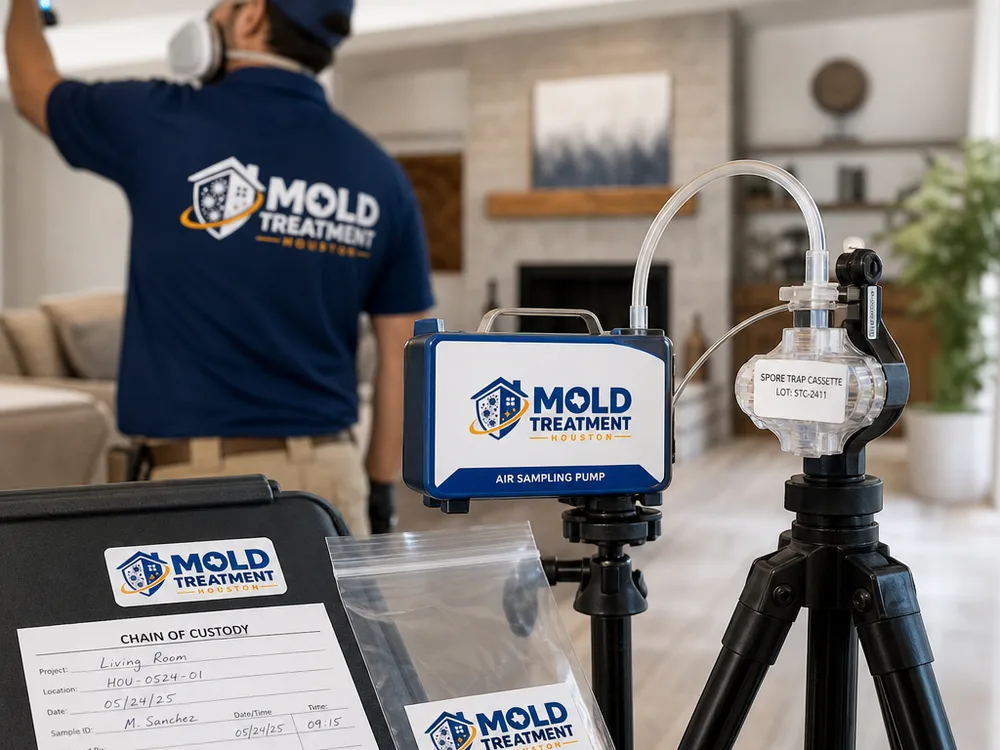
We choose locations based on symptoms, moisture history, and airflow patterns, then compare indoor results to an outdoor baseline.
You receive findings tied to rooms, notes, and visual observations so the report reads like a decision tool, not a data dump.
We explain what the results mean, what needs to be fixed first—usually moisture—and when follow-up testing makes sense.
We can document conditions in a way that works for homeowners, tenants, property managers, and maintenance teams.
For condos, offices, and multifamily buildings, we account for shared walls, stacked plumbing, and HVAC distribution that can move air between spaces.
We start with what prompted the request: odor, visible spots, recent leak, tenant complaint, or clearance needs. We confirm whether you need a general assessment, targeted sampling, or documentation for a specific area.
We walk the space and look for moisture pathways around plumbing penetrations, windows, HVAC registers, staining, and material changes. Moisture readings help prioritize where sampling will be most useful.
We typically collect an outdoor baseline and then indoor air samples in selected rooms. If there is visible suspect growth, surface sampling may be added to help identify what is on the material.
Samples go to a laboratory for analysis. Your report documents sample locations, observations, and results, then explains what the findings suggest in plain language.
If results point to an active moisture issue, we outline the order of operations: stop the water source, dry the materials, then address contaminated materials and cleaning. For post-remediation verification, we explain what conditions should be met before re-testing.
Mold testing in Houston typically ranges from about $250 to $750 for many homes, depending on how many sample points are needed and how targeted the inspection is. A basic visit with a small number of air samples often sits toward the lower end, while larger homes, multiple problem areas, or commercial spaces with more sampling locations can run higher.
Your final price mainly depends on the number of air and surface samples, the size and layout of the property, access such as attics and tight mechanical closets, and whether you need documentation for clearance or a specific complaint area. Exact cost is confirmed after we understand the scope during scheduling and on-site.
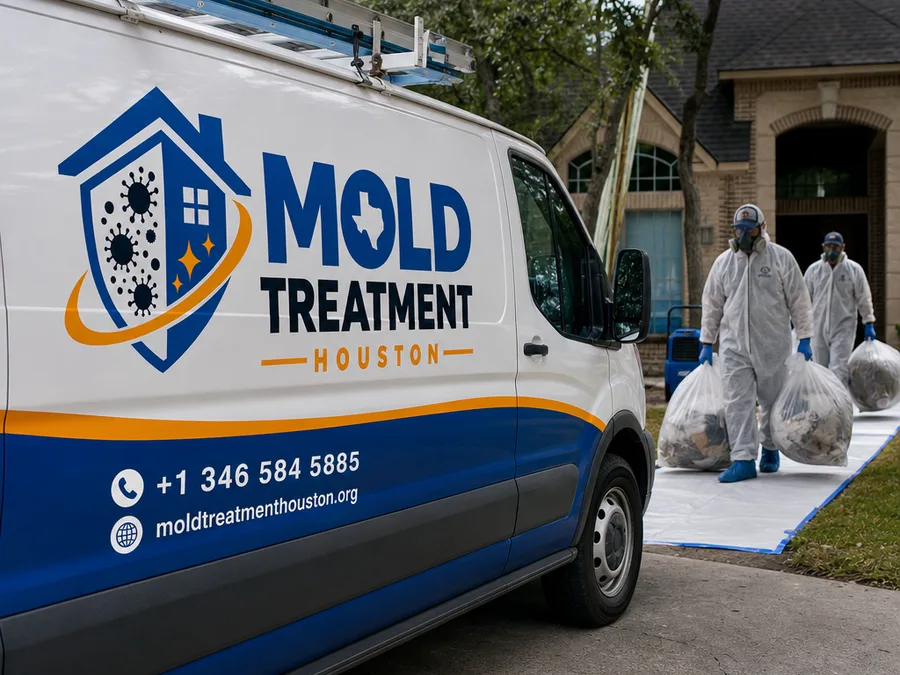
Houston buildings face moisture conditions that affect both where mold shows up and how sampling should be interpreted.
Humidity and frequent HVAC use: When outdoor humidity stays high, condensation around supply lines, vents, and poorly insulated areas can keep materials damp. We pay close attention to HVAC closets, return paths, and rooms that feel clammy or smell musty.
Storm and leak history: After heavy rain events, water intrusion can appear around windows, roof penetrations, and exterior walls. If a space had a past leak, we do not assume it is dry now. We verify with inspection notes and moisture checks.
Mixed building types near Post Oak: In high-rises and multifamily properties, air movement and shared assemblies matter. A complaint in one unit can be influenced by adjacent units, shared corridors, or stacked plumbing. For mold testing Houston Post Oak requests, we can sample in a way that helps separate a unit-level issue from a building-level moisture source.
If you already know there was a water incident, testing is most useful when paired with clear documentation of what was wet, what was removed, and what was dried. That context helps keep the report actionable.
Scheduling depends on current demand, but many inspections can be set within a short window, especially for urgent post-leak situations. When you reach out, we will ask what symptoms you are seeing and what areas are involved so we can plan the right number of samples and avoid a second trip.
Air sampling helps evaluate what is in the breathing zone, while surface sampling helps identify what is growing on a specific material. Many jobs use air samples plus an outdoor baseline, and add surface sampling only when there is visible suspect growth or a specific material you need identified for documentation.
Keep the space in normal living or working condition and avoid unusual activities like heavy cleaning with strong chemicals right beforehand. If you recently ran air scrubbers, foggers, or ozone devices, tell us during scheduling because those can temporarily change airborne results and make interpretation harder.
Testing can point to patterns consistent with a moisture problem, but it does not automatically identify the exact water entry point. During the inspection we look for likely pathways and document conditions, and we may recommend targeted moisture investigation if the source is not obvious.
There is not a universal requirement for every sale, but testing is often requested when an inspection notes past water damage, visible staining, or odor. If you are buying or selling, a clear sampling plan and a written report help keep decisions grounded in evidence rather than assumptions.
Yes. For mold testing Houston Post Oak properties, we plan around shared walls, stacked plumbing lines, and HVAC distribution that can move air between spaces. If a property manager needs documentation for a specific unit or suite, we can record sample locations and observations in a way that supports maintenance follow-up.
Many lab results are available within a few business days, depending on the lab and the sample types. If timing is critical, tell us up front so we can discuss options that fit your deadline.
Tell us what you are noticing and where, and we will recommend a sampling plan that fits the property and the decision you need to make next.