
Clear scope before work starts
We spell out what areas are included, what materials are being removed or cleaned, and what conditions would change the scope once surfaces are opened.
Serving Houston, Texas & surrounding areas
24/7 Emergency Response
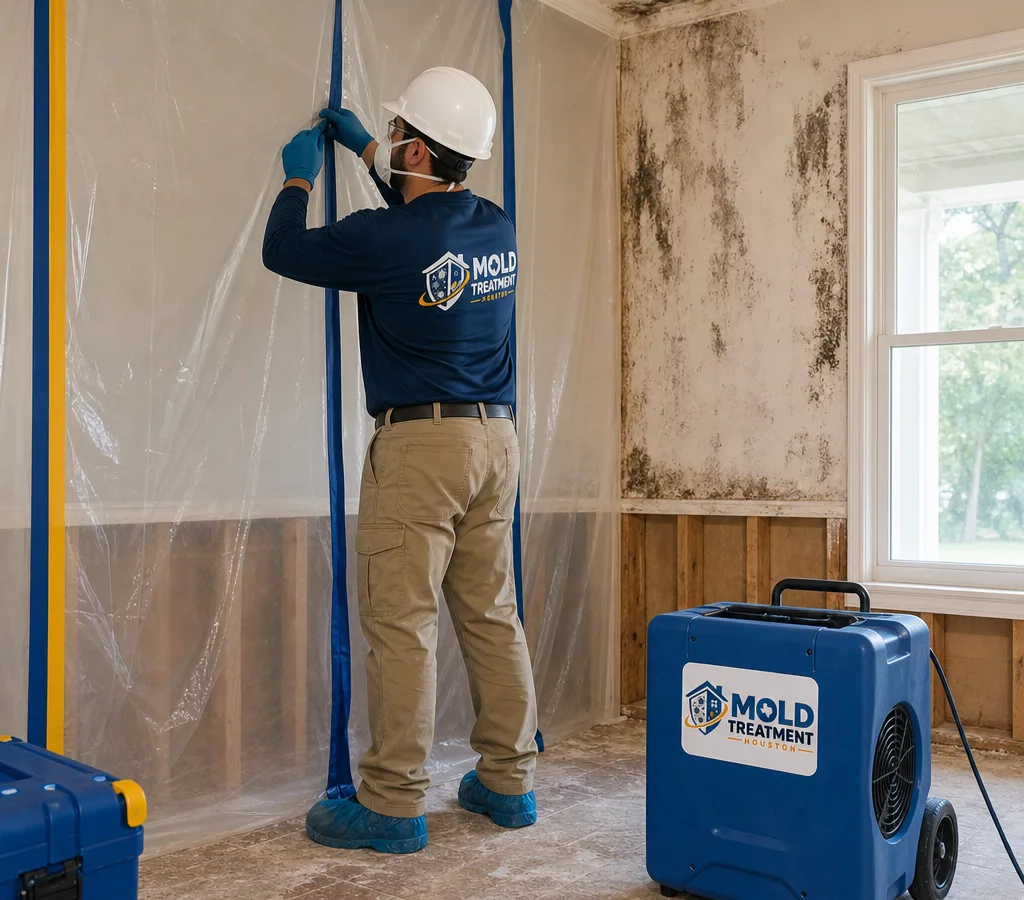
Get a clear plan from inspection through cleanup, with containment, HEPA filtration, and documentation that helps you move forward with confidence.
Mold shows up when building materials stay damp. In Houston's humid climate, that can happen fast after a roof leak, plumbing leak, AC condensate issue, or flooding. The most effective mold removal in Houston is a controlled process: find what is wet, isolate the work area, remove or clean contaminated materials the right way, and confirm the area is dry enough that growth is unlikely to return.
Mold Treatment Houston handles residential and commercial work across Houston, TX (ZIP 77007 and nearby areas). We focus on safe work practices, clear scopes, and practical guidance on what should be removed versus cleaned. If you are dealing with musty odor, visible growth, recent water damage, or failed DIY cleanup, the next step is a professional inspection so the source and the extent are not guessed.
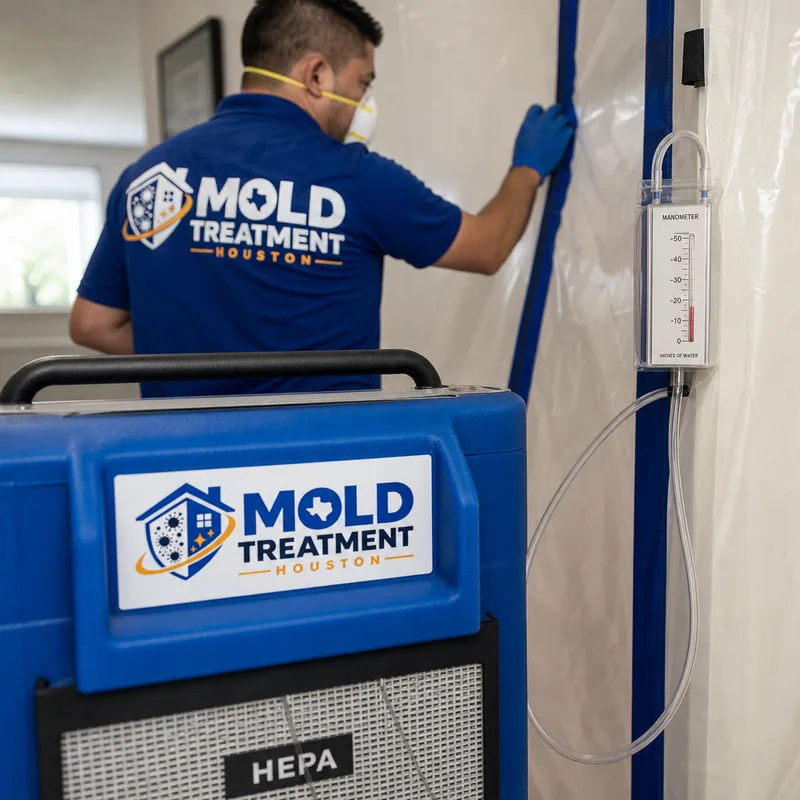
A good Houston mold removal job is judged by control and completeness. That means containment to keep spores from spreading, HEPA filtration, cleaning of adjacent surfaces, and responsible disposal of affected materials. It also means you get straight answers about what we found and what it takes to fix it.
Most projects follow a similar scope, scaled to the size and the materials involved.
If you are already planning broader repairs after a leak, it helps to align the remediation scope with the rebuild plan early. You can get a feel for how we approach projects by starting with Mold Treatment Houston.
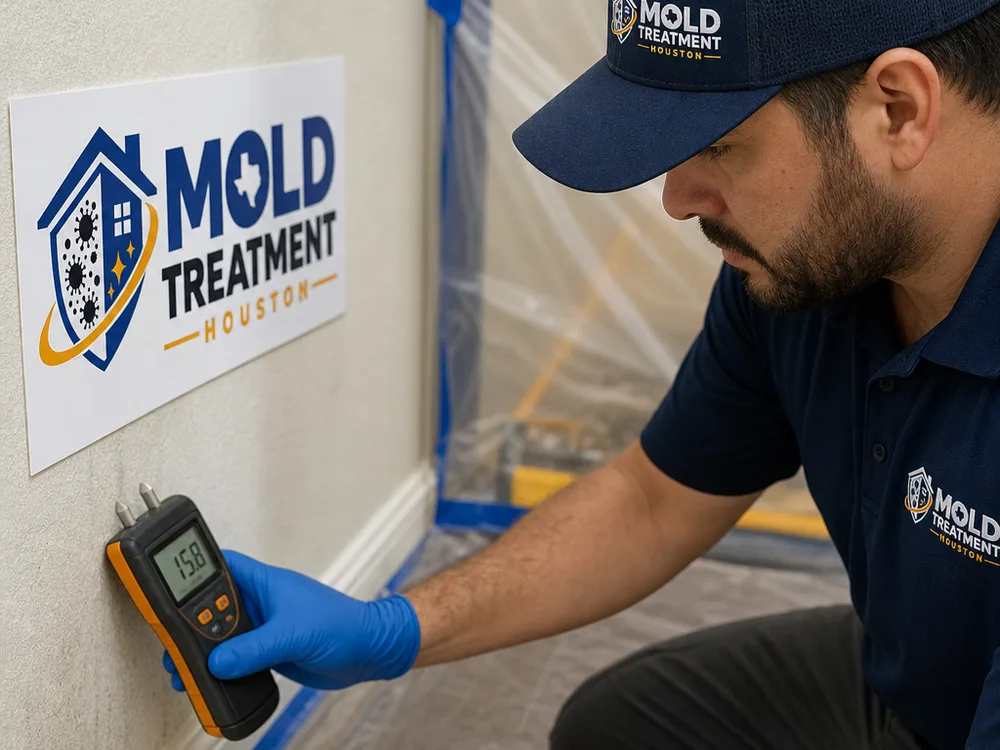
We spell out what areas are included, what materials are being removed or cleaned, and what conditions would change the scope once surfaces are opened.
Containment and HEPA filtration are used when the situation calls for it, especially in occupied homes, multi-unit buildings, and commercial spaces.
You get guidance on the moisture source, ventilation, and repair priorities so remediation and repairs do not work against each other.
We plan access, protect flooring, and keep the worksite organized. For businesses, we can coordinate around operating hours when feasible.
A small bathroom spot, a damp crawlspace, and a flooded first floor require different containment, removal, and drying decisions.
We inspect the affected area, look for the moisture source, and check nearby materials that commonly wick water (baseboards, drywall seams, insulation, and subfloor edges).
You receive a work plan with what is included, the containment approach, and what needs to happen before we arrive (clearing access, pets, HVAC considerations).
We set up poly barriers and, when appropriate, negative air with HEPA filtration to reduce cross-contamination into adjacent rooms or corridors.
Affected porous materials are removed as needed. Remaining surfaces are HEPA vacuumed and cleaned. We use methods suited to the material, not a single product for everything.
We verify that the area is drying properly and remove containment. You get photos and notes so the rebuild can start without guessing what was done.
Most mold removal projects in Houston typically range from about $800 to $6,000+, with small, contained areas sometimes closer to $500 to $1,500 and larger, multi-room or heavily impacted jobs running higher. The final price depends on how far the mold has spread, what materials are affected (drywall, insulation, cabinets), the containment level required, access (attics, tight closets), and whether drying equipment is needed. The exact cost is confirmed after an on-site inspection and a written scope.
Book Your Inspection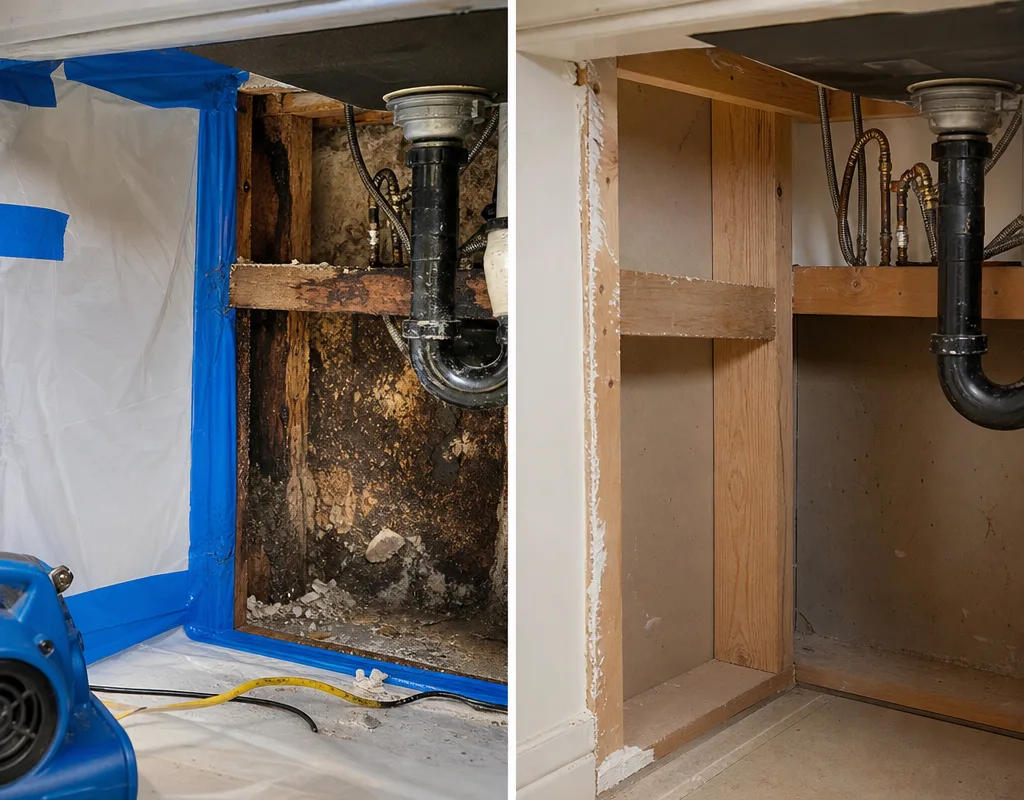
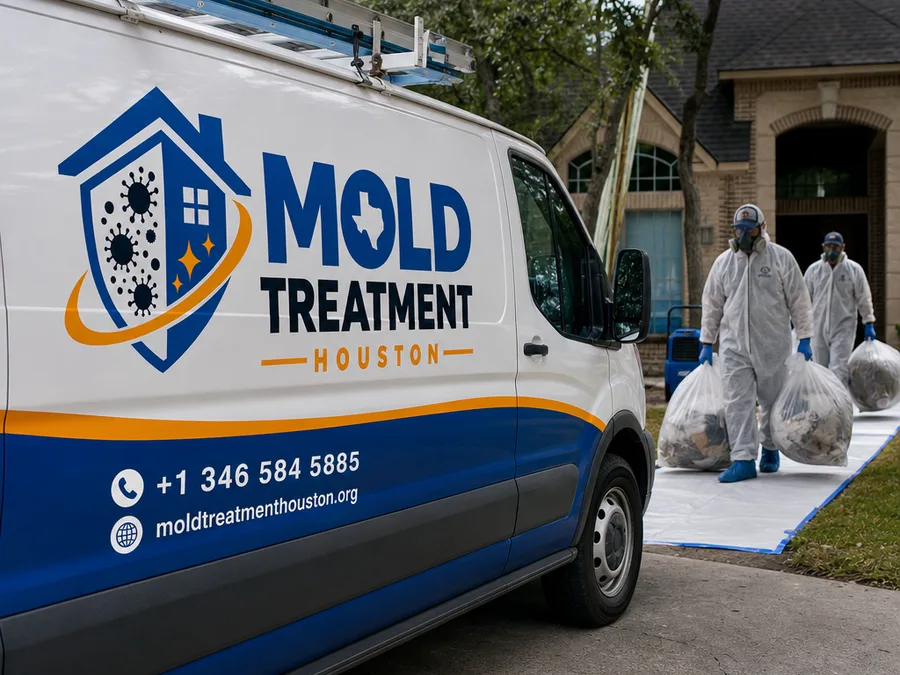
Many jobs take 1 to 3 days of on-site work, but the schedule depends on the size of the affected area and how much drying is required. A small, contained bathroom or closet issue can sometimes be handled in a single day, while multi-room removal or attic work often needs additional time for containment setup, careful removal, and post-cleaning verification.
Often yes for smaller, well-contained projects, but it depends on where the mold is and who lives in the home. If the work is in a primary living area, or if anyone has respiratory sensitivity, we may recommend limiting access to the work zone or scheduling work to reduce exposure. Containment and HEPA filtration are key to keeping the rest of the home usable during remediation.
Drywall usually needs to be removed when growth is established because it is porous and can hold contamination below the surface. If the issue is limited to surface staining on a non-porous material, cleaning may be appropriate, but we decide based on the material type, how long it has been wet, and whether the back side or insulation is affected.
Mold returns when moisture is still present or comes back, such as an unrepaired leak, recurring AC condensate overflow, poor ventilation in a bathroom, or wet building materials that never fully dried. A proper Houston mold removal plan addresses drying and the moisture source along with cleaning and removal, because treatment alone does not stop future growth.
Yes. For offices, retail, and multi-tenant properties, we can coordinate access, staging, and containment so the impact on neighboring suites is minimized. Documentation and clear boundaries of the work area are especially important in commercial settings where multiple parties need to align on responsibilities.
Yes. If materials are still wet, early action reduces how much needs to be removed later. We can evaluate what is damp, recommend drying steps, and outline what to monitor next. If you are already thinking about the broader cleanup and repair sequence, our water damage restoration service is often part of the same conversation.
If you smell a musty odor, see staining, or had a recent leak, get an inspection and a written scope so you know what actually needs to be removed, cleaned, and dried.
Call for a EstimateTell us what you are seeing and where it is happening. We will review the situation, explain the containment and cleanup approach, and provide straightforward pricing based on the scope.