
Containment that matches the risk
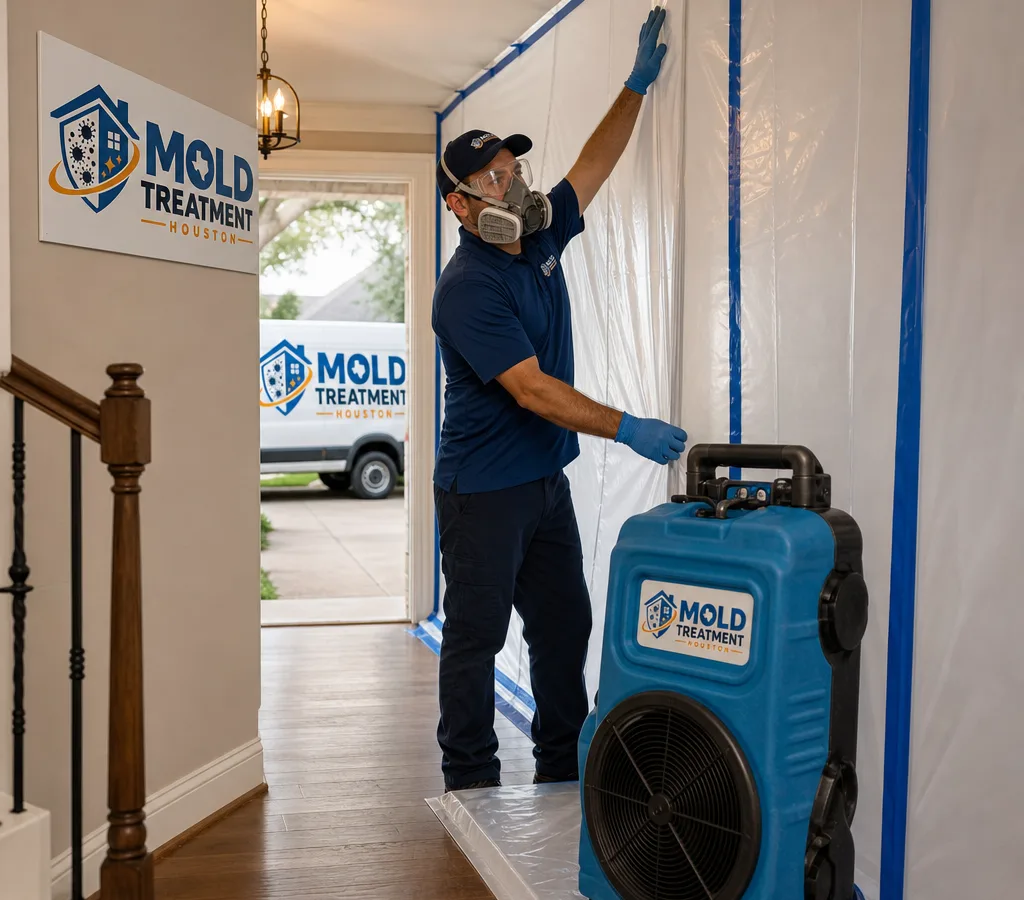
We isolate the work area with plastic sheeting, maintain negative pressure when needed, and control entry and exit so spores and dust stay in the contained zone.
Serving Houston, Texas & surrounding areas
24/7 Emergency Response
Get a clear plan, controlled containment, and documented cleanup so the space is safe to use again and the cause is addressed, not covered up.
If you're searching for mold clean up Houston, you're usually dealing with one of two problems: visible growth that's spreading, or a musty odor after a leak, overflow, or humidity event. Either way, the goal is the same: keep spores from spreading, remove contaminated materials the right way, and treat the remaining surfaces so the issue doesn't return.
Our team at Mold Treatment Houston handles mold cleanup work across Houston, TX 77007 and surrounding areas. We focus on controlled work practices—containment, air filtration, and dust management—source-focused recommendations so the moisture problem is corrected, and written documentation so you can understand what was found and what was done.
Houston's long humid stretches and frequent storm-driven water intrusion mean mold can move quickly when materials stay damp. Drywall, insulation, carpet pad, and wood framing can all be affected, but the cleanup approach depends on the material and how deep the growth goes. The right plan starts with an inspection and a scope that matches the conditions in your property, not a one-size checklist.
We isolate the work area with plastic sheeting, maintain negative pressure when needed, and control entry and exit so spores and dust stay in the contained zone.
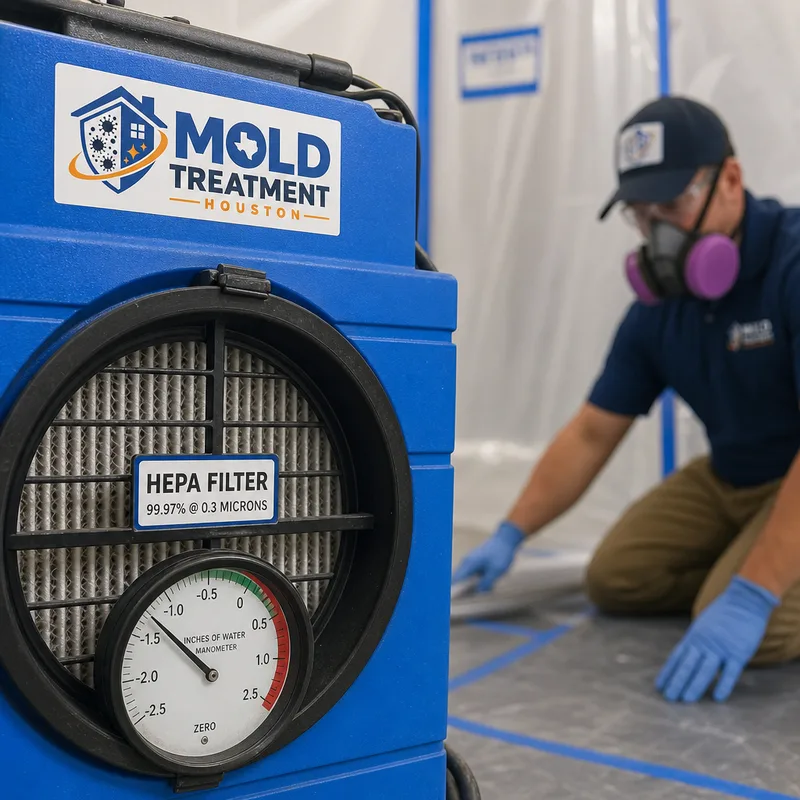
HEPA air scrubbers and HEPA vacuums capture fine particulate during and after removal. Final cleaning focuses on ledges, returns, and adjacent surfaces where dust settles.
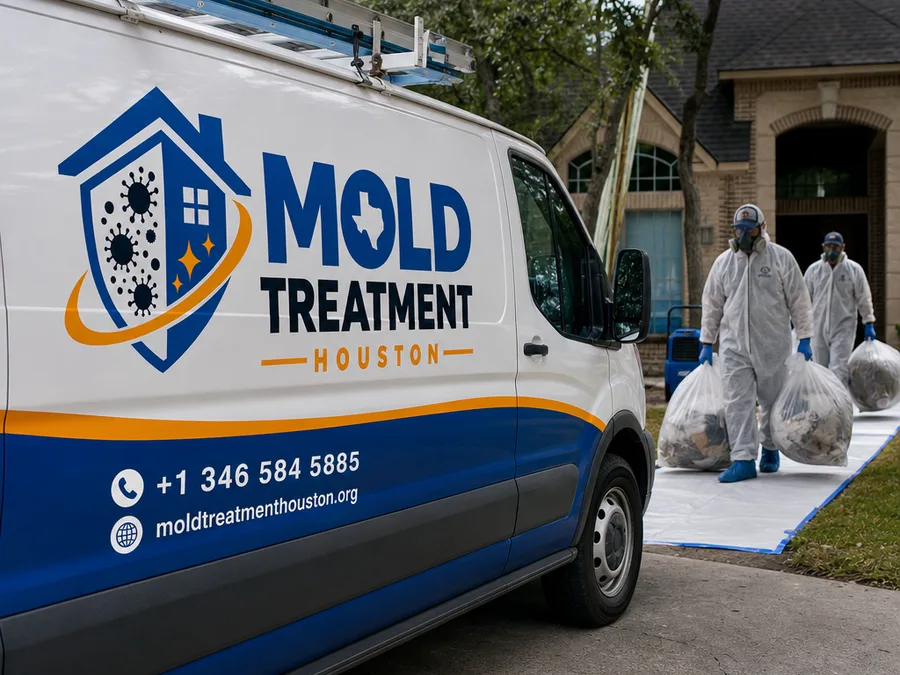
Some materials cannot be reliably cleaned once contaminated, often including porous items like insulation or carpet pad. When removal is required, we bag out debris and keep pathways protected.
After cleaning, we apply antimicrobial treatments based on the surface and the situation. Treatment supports cleanup, but it does not replace removal and moisture correction.
You receive notes and photos that show the affected areas, the containment setup, what was removed or cleaned, and what to address so conditions don't repeat.
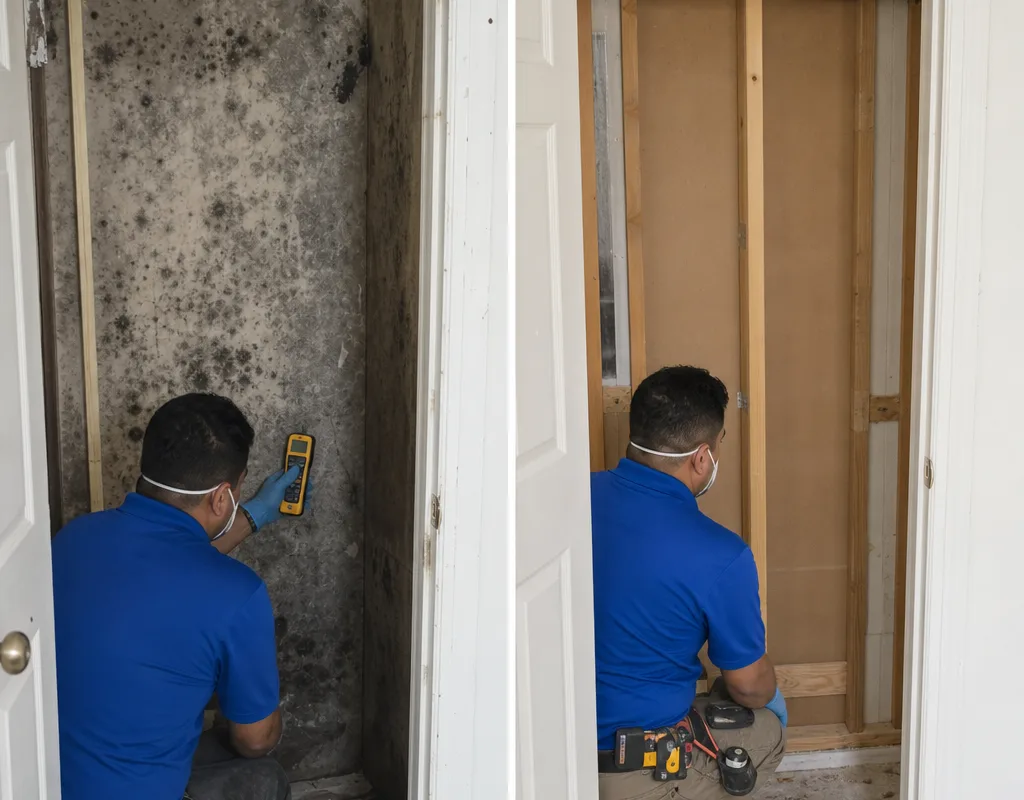
A proper mold cleanup is controlled demolition and fine-detail cleaning, not a quick spray-and-wipe. If growth is on or inside drywall, the goal is to remove the contaminated section and any wet insulation behind it while keeping the rest of the home protected. If the issue is limited to non-porous surfaces, cleaning and treatment may be enough, but it still needs HEPA filtration and careful wipe-down.
Common reasons mold cleanup fails:
In Houston, humidity makes partial drying and “wait and see” risky after plumbing leaks, roof leaks, or overflow events. The fastest route back to normal is a clear scope, quick stabilization, and removal of anything that can't be restored.
If you're comparing companies, start with the basics: ask what containment they'll use, whether HEPA air filtration is included, how they determine what materials must be removed, and what documentation you'll receive when the work is complete. You can also get a feel for how we operate by visiting Mold Treatment Houston and reviewing how we handle service calls and next steps.
We identify the affected materials, likely moisture source, and the level of containment needed. You get a plain-language scope so you know what will be removed, cleaned, and treated.
We set up barriers, protect floors and pathways, and run HEPA air filtration. When needed, we establish negative pressure so air moves into the work area, not out of it.
Damaged porous materials are carefully removed and bagged. Remaining surfaces are HEPA vacuumed and wiped using appropriate cleaners and antimicrobials for the substrate.
Cleanup and drying go together. If materials are still damp, the job isn't finished. We coordinate around the fix that stops the moisture, then verify conditions are dry enough to close.
We complete final cleaning, remove containment, and provide photos and notes. You also get practical guidance on what to repair or adjust so the issue doesn't repeat.
Mold clean up in Houston typically ranges from about $750 to $3,500 for many residential jobs, while larger or more complex projects—multiple rooms, heavy demolition, or strict containment—can run $5,000+. A small, limited area with straightforward access is usually on the low end, and jobs involving drywall removal, insulation, or tight crawlspaces trend higher.
Final price depends on the size of the affected area, what materials must be removed, the containment level, access such as attics or areas behind cabinets, and whether drying coordination is needed. The exact cost is confirmed after an on-site inspection and written scope.
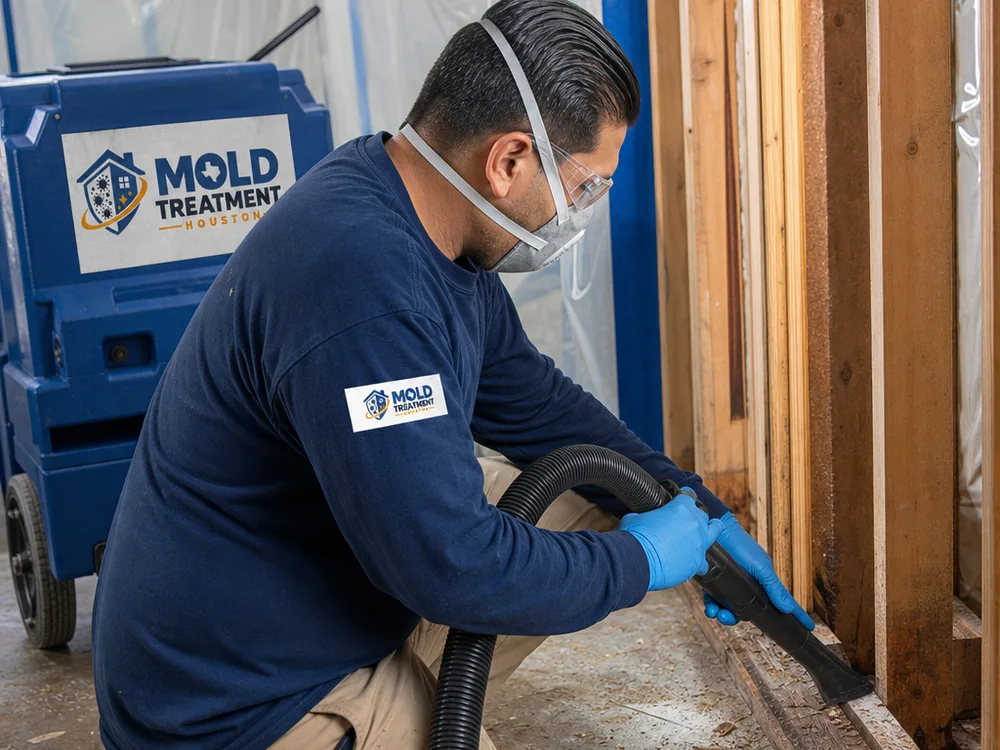
Many mold cleanup situations can begin quickly once the scope is confirmed, especially when the area is actively wet or growth is spreading. The first priority is stabilization: isolating the area and setting up HEPA filtration so the rest of the property stays protected while removal and cleaning are completed.
The difference is whether the contractor removes contaminated porous materials and controls airborne spread, or only wipes visible areas. Professional mold cleanup focuses on containment, HEPA filtration, removal where needed—drywall, insulation, or carpet pad—and detailed cleaning so hidden contamination and settled dust are addressed.
It depends on the area being remediated and whether key rooms or pathways are affected. With proper containment and air control, many clients remain in the home, but it may be more comfortable to stay out of the immediate work zone, especially if the affected area is near bedrooms or main living spaces.
Sampling is not required for every cleanup, and many jobs are scoped based on visible conditions and moisture history. If testing is requested for documentation or peace of mind, it should be done with a clear goal—baseline, clearance, or identification—because the cleanup plan still needs to be built around containment, removal, and moisture correction.
Wood framing can often be cleaned if it is structurally sound and the growth is limited to the surface. The process typically involves HEPA vacuuming, damp wiping with appropriate cleaners, and antimicrobial treatment, followed by verification that the area is dry enough to close back in.
Keep the affected area closed off if possible, avoid running fans that blow air out of the room, and don't disturb visible growth by dry-scrubbing. If the leak source is active, shut off the water if safe to do so, and remove small personal items from the immediate area so containment can be set up efficiently.
Tell us what you're seeing, where it is, and what caused the moisture. We'll provide a written scope, explain containment and next steps, and schedule mold clean up in Houston with minimal disruption to the rest of the property.