
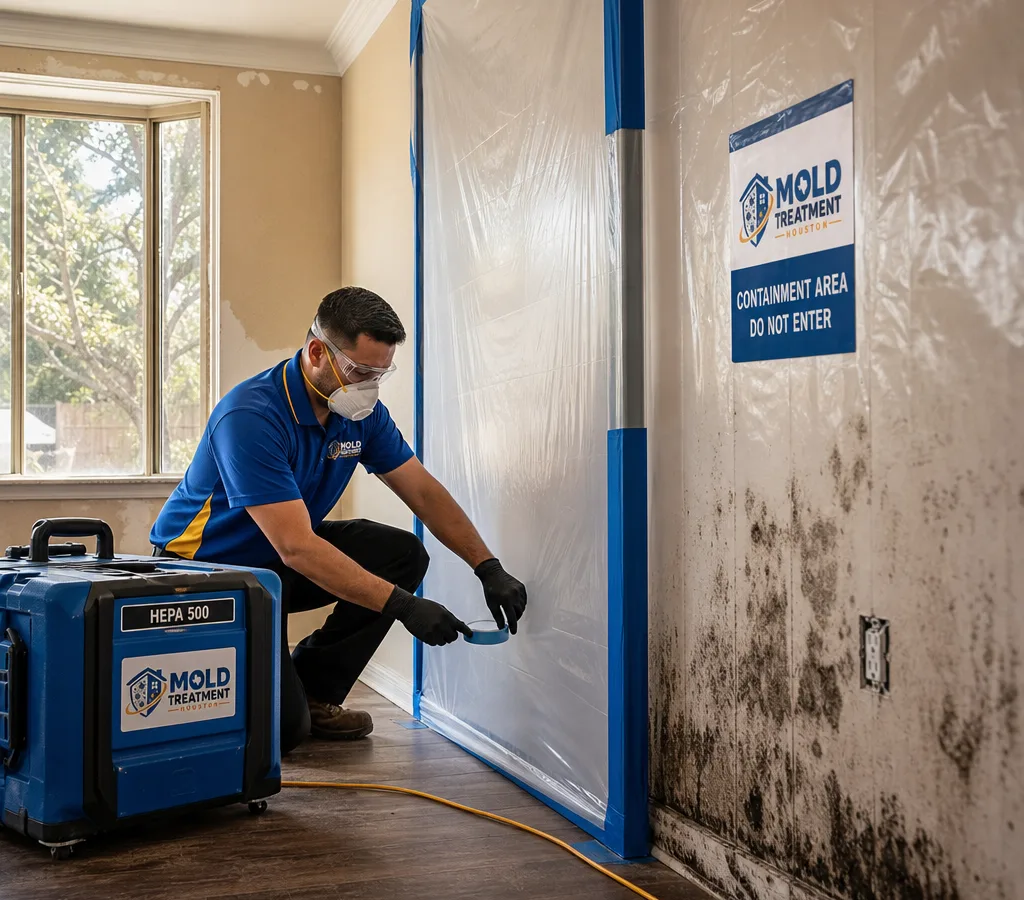
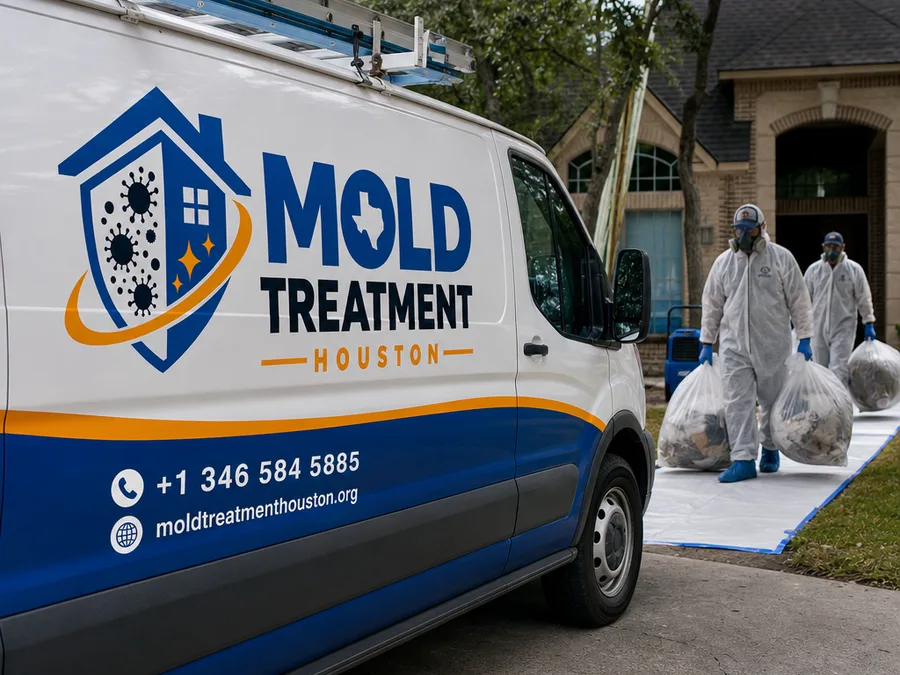
Containment set up for the affected area
We isolate the work zone with poly sheeting and maintain negative air when needed, so spores and dust stay inside the containment instead of drifting through the home or office.
Serving Houston, Texas & surrounding areas
24/7 Emergency Response
When mold shows up, the goal is simple: stop the spread, remove contaminated materials safely, and get a repair plan you can trust. Mold Treatment Houston handles inspection, containment, cleanup, and clear next steps for homes and commercial spaces across Houston.
Mold damage in Houston often starts quietly after a leak, an HVAC drain line backup, a roof intrusion, or long-term humidity in a closed-up room. Once spores find moisture and a food source—drywall paper, wood framing, insulation, carpet backing, or dust—growth can spread behind baseboards and inside wall cavities where you cannot see it.
Common signs include a persistent musty odor, staining on drywall or ceilings, bubbling paint, warped baseboards, and irritation that improves when you leave the building. In older bungalows in the Heights and parts of Montrose, plaster and wood lath can hide damp areas and make the affected footprint bigger than the visible stain. In newer builds around Spring Branch and Westchase, mold damage frequently tracks to tight building envelopes and HVAC issues such as poor return airflow or condensation around supply boots.
If you are searching for mold damage Houston help, the priority is to treat this as a contamination and moisture problem, not just a cosmetic one. Painting over staining or spraying a deodorizer usually leaves active growth and damp materials in place, which can keep triggering odors and re-growth.
We isolate the work zone with poly sheeting and maintain negative air when needed, so spores and dust stay inside the containment instead of drifting through the home or office.
Non-salvageable porous materials like drywall, insulation, and carpet padding are removed carefully, bagged, and taken out without dragging debris through clean areas.
Mold removal only sticks when the moisture is addressed. We document likely contributors such as plumbing leaks, condensation, or drainage and outline what needs to change.
We use HEPA vacuuming and appropriate antimicrobial cleaning where it applies, focusing on remaining structural materials and surfaces that can be properly cleaned.
After cleanup, you get a straightforward scope of what was removed and what is required to put the space back together, so the rebuild is predictable.
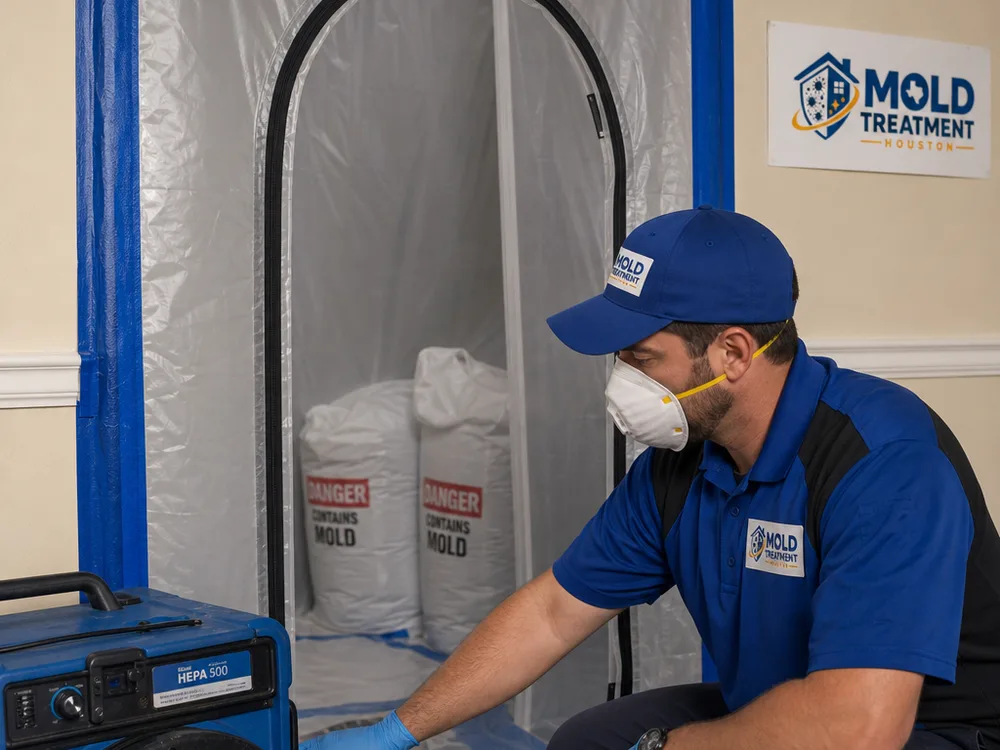
Containment and HEPA filtration help keep demolition dust and spores inside the controlled work area.
Mold damage cleanup is more than wiping a surface. The right scope depends on where growth is, what materials are affected, and whether air movement is spreading spores.
Typical mold damage work includes:
What to be careful about:
Our team explains what to expect when you reach out, including scheduling, site access, containment, and the next steps after cleanup.
We walk the affected areas, look for moisture pathways, and confirm what materials are likely impacted. If there is a current leak or active water source, stabilizing that comes first.
We protect adjacent rooms, set up containment, and use HEPA filtration. In multi-room situations, we plan the clean-to-dirty workflow so technicians are not tracking contamination across the home.
Porous materials that cannot be reliably cleaned are removed. Remaining framing and hard surfaces are HEPA vacuumed and cleaned, with attention to corners, fasteners, and dust that can re-seed growth.
We confirm conditions are trending dry and stable before containment comes down. If drying equipment is required, we plan it so it does not push air from the work zone into clean areas.
You receive a clear description of what was removed and what needs rebuilding. Many clients use this to coordinate repairs, restoration, and follow-up work with confidence.
Mold damage cleanup in Houston typically ranges from $750 to $6,000+, with small, contained areas often landing around $750 to $2,500 and multi-room or behind-wall remediation commonly running $3,000 to $6,000+.
Price depends on the size of the affected area, how far contamination extends behind drywall or into insulation, required containment and negative air, access such as tight attics or crawlspaces, and whether contents need special handling. The exact cost is confirmed after an on-site inspection and written scope.
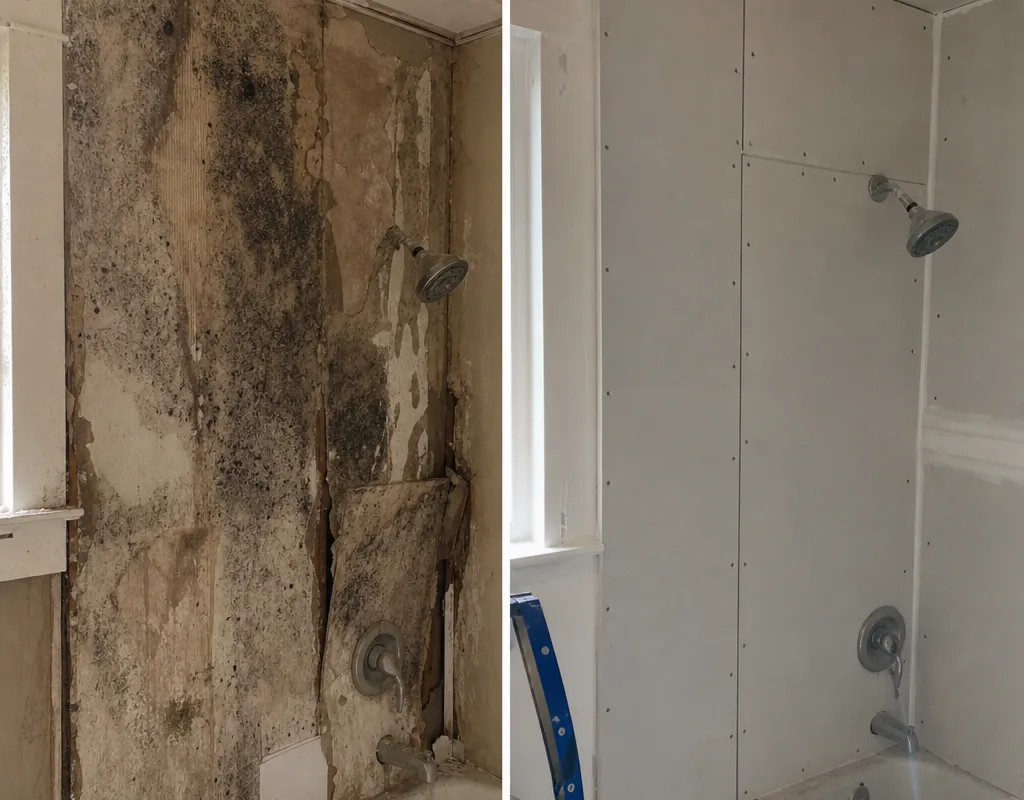
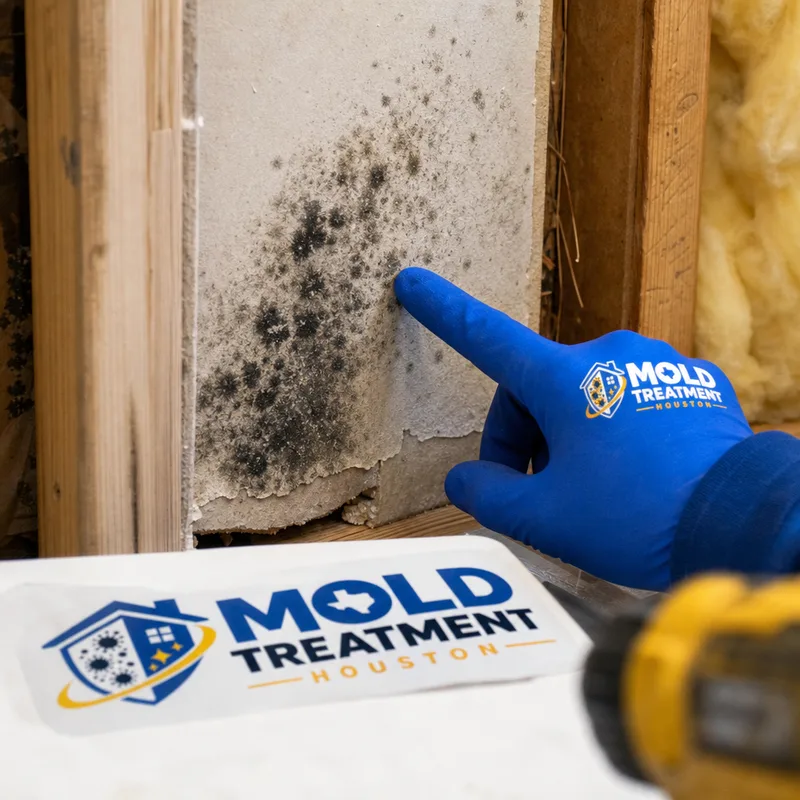
Many mold damage jobs can start quickly once the affected area is identified and access is available, because containment and controlled removal are the priority. If there is an active leak or wet materials, stabilizing the moisture source first prevents the scope from growing while work is underway.
Often, yes, if the affected area can be fully contained and the work zone is separated from living areas, but it depends on the location and size of the contamination. If the only bathroom is impacted, the HVAC is pulling from the work area, or there are sensitivities in the household, temporary relocation during demolition and cleaning may be the practical choice.
Porous materials like drywall and insulation usually need removal when they are contaminated because they cannot be reliably cleaned through the full thickness. Hard structural materials like framing can often be cleaned with HEPA vacuuming and appropriate antimicrobial methods after the contaminated porous layers are removed.
Bleach may lighten staining on some non-porous surfaces, but it is not a reliable remediation method for mold damage on porous building materials like drywall or wood. A proper scope focuses on containment, removal of contaminated porous materials, and correcting the moisture condition that allowed growth.
Re-growth is usually tied to unresolved moisture, such as a slow plumbing leak, roof intrusion, condensation from HVAC issues, or high humidity in a closed space. A cleanup can be performed correctly and still fail if the building continues to feed moisture into the same materials or cavities.
Yes. After the cleanup phase, most properties need a straightforward repair plan for drywall, trim, paint, flooring, or cabinet toe-kicks. If the mold damage is tied to a water event, many clients coordinate the sequence with water damage cleanup so drying, containment, and rebuild decisions do not conflict.
Tell us what you are seeing and where it started. We will assess the affected areas, explain the containment and cleanup plan, and help you move forward with repairs that make sense for your property in Houston.