
Moisture mapping, not guesswork
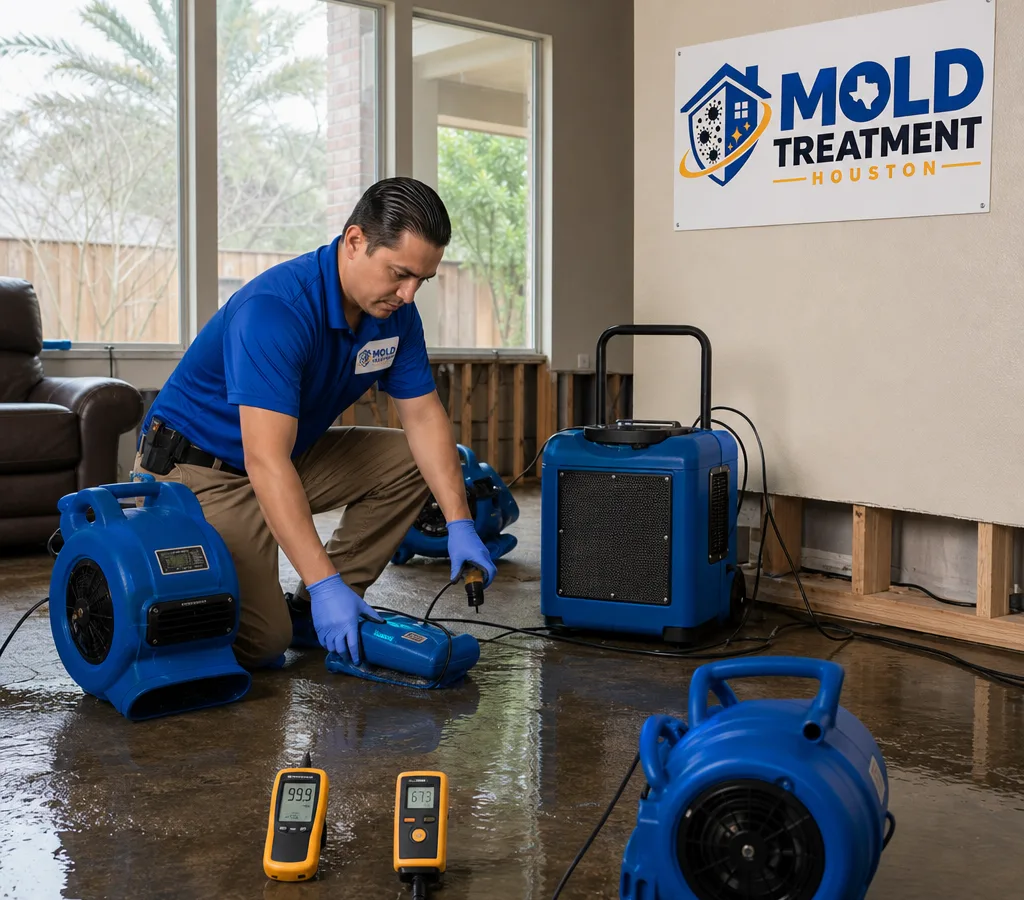
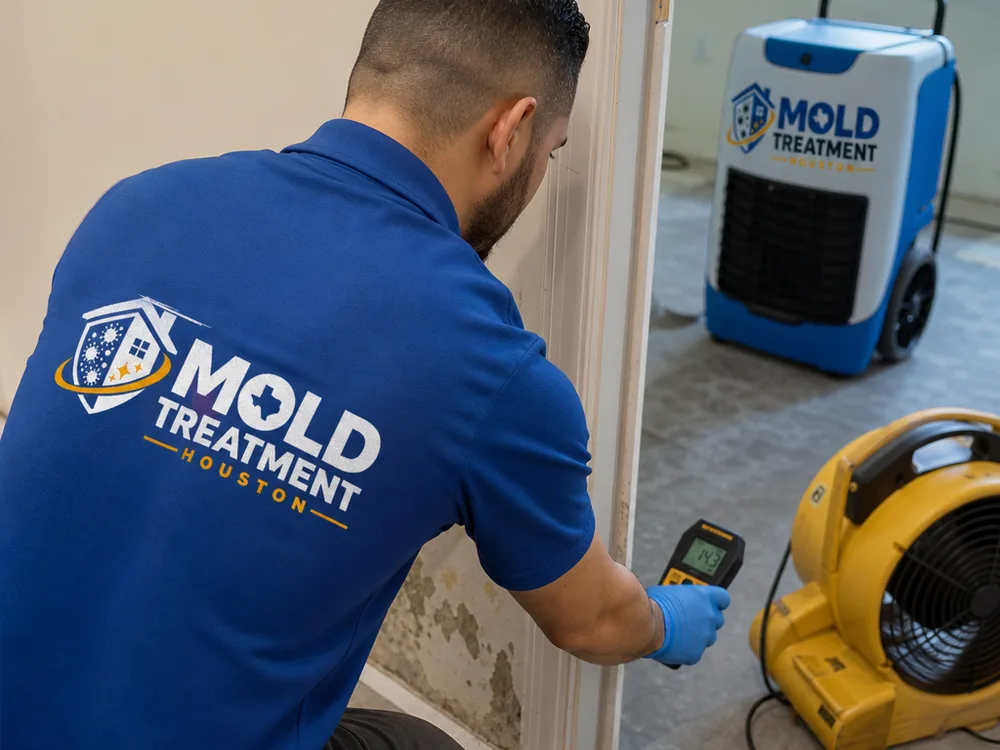
Drying decisions should come from moisture meters and thermal imaging where appropriate, with notes on affected rooms, wall cavities, and flooring assemblies.
Serving Houston, Texas & surrounding areas
24/7 Emergency Response
Fast water cleanup, professional drying, and a clear written plan for getting your property back to normal after a leak, backup, or storm intrusion in Houston.
If you searched for water restoration Houston, you are probably dealing with an urgent problem: wet floors, swollen drywall, a musty smell starting to build, or water that keeps spreading. In Houston, the combination of humidity and warm temperatures can push moisture deeper into materials and make secondary damage happen faster. The right response is a measured one: stop the water source, remove standing water, confirm what is actually wet with instruments, then dry in a controlled way.
Our team at Mold Treatment Houston handles Houston water restoration with an emphasis on documentation and plain-language communication. You should know what is being removed, what is being dried in place, how long drying is expected to take, and what conditions must be met before equipment comes out. That is how you avoid hidden moisture and repeated repairs.
We focus on water restoration for common Houston scenarios: supply-line leaks, water heater failures, AC drain pan overflows, roof intrusions during heavy rain, and plumbing backups. Each one requires a different approach because the water category and the materials affected drive the drying plan and the safety steps.
Drying decisions should come from moisture meters and thermal imaging where appropriate, with notes on affected rooms, wall cavities, and flooring assemblies.
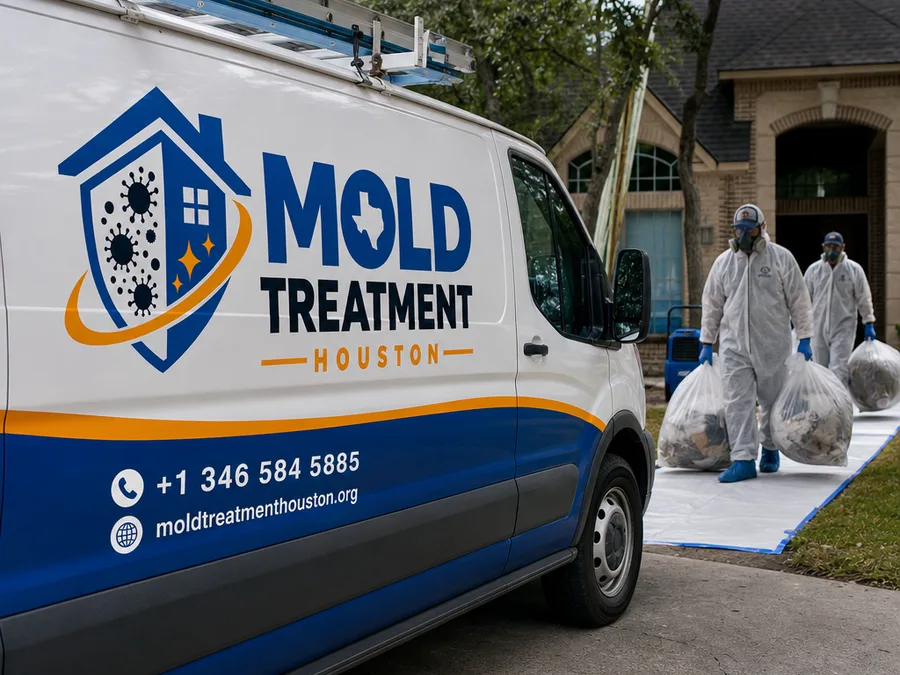
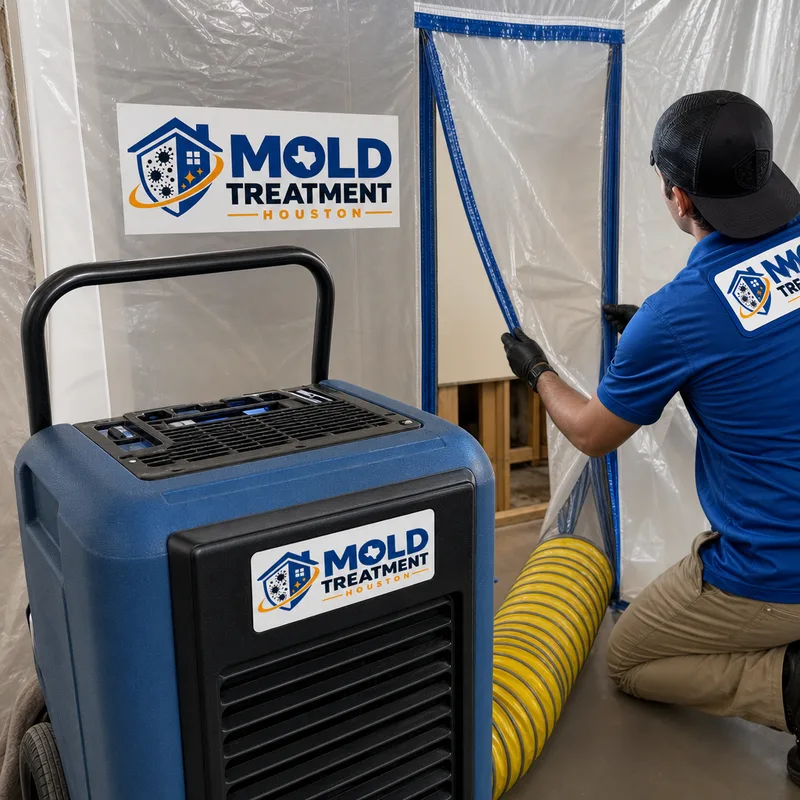
If water affected a bathroom, kitchen, or a backup reached porous materials, containment and controlled demo protect the rest of the property from cross-contamination.
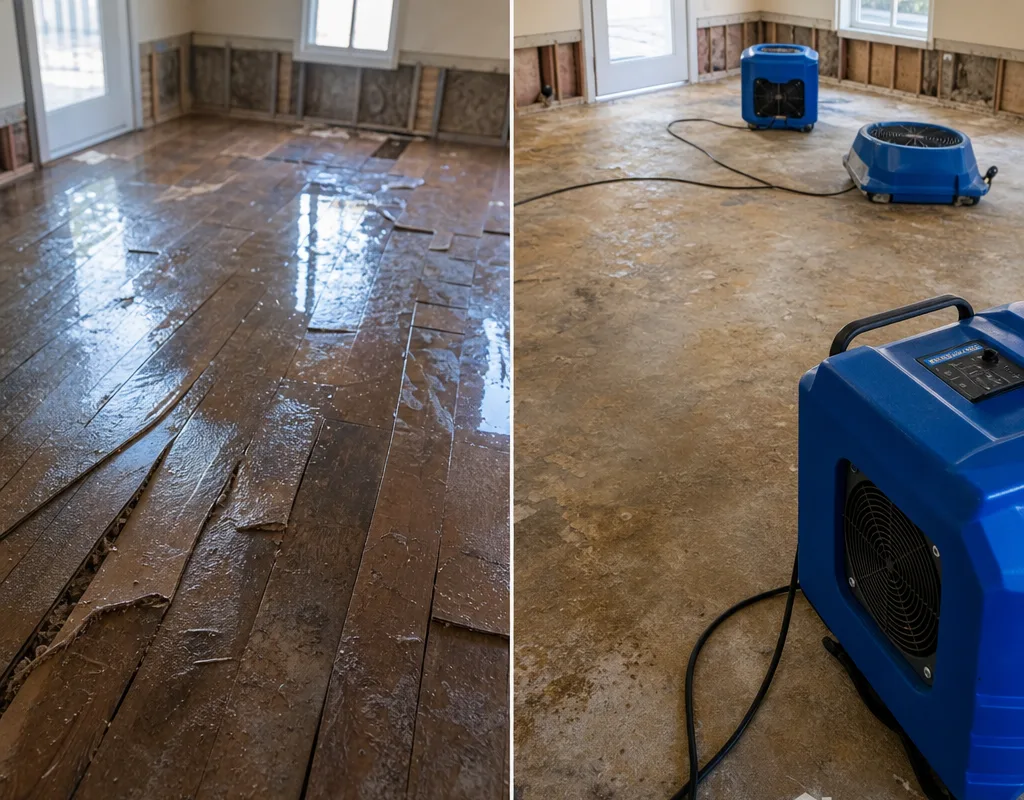
Air movers, dehumidifiers, and filtration are selected for the material load and the building conditions, then adjusted as readings change.
You should have a written scope of work and a simple update on progress: what is drying, what is stable, and what the next checkpoint is.
Floor protection, careful baseboard removal when needed, and content handling reduce unnecessary replacement costs and disruption.
Restoration is not finished when the fans stop. You should leave with a plan for repairs and the documentation needed to move forward.
Water restoration is a controlled process. When it is rushed or improvised, water can stay trapped under flooring, in drywall, or inside cabinets, then show up later as odor, staining, or warped materials.
A professional water restoration approach typically includes:
In Houston's humid conditions, dehumidification strategy matters. Drying is not only about blowing air. It is about removing moisture from the air so wet materials can release water and reach a stable condition.
We start with the basics: what happened, when it started, whether power needs to stay off in affected areas, and whether a backup or contaminated water is involved.
We inspect the affected rooms, take moisture readings, and outline what will be extracted, what will be removed, and how drying will be set up. You get a clear plan before major work begins.
We extract water, protect floors and traffic paths, and stage equipment so it is effective without creating unnecessary hazards in walkways.
If materials are not salvageable, we remove them selectively. That often includes baseboards, sections of drywall, saturated insulation, or compromised flooring layers.
We place air movers and dehumidifiers based on the material load and room layout, then monitor moisture levels until targets are met.
When drying goals are reached, we document the end condition and walk you through repair priorities so you can schedule rebuild work with fewer surprises.
Most water restoration projects in Houston typically range from about $1,500 to $7,500, with small, contained leaks at the low end and multi-room losses with demo and extended drying at the high end. A single affected room with extraction and drying often lands around $1,500 to $3,500, while larger losses involving floors, cabinets, or multiple wall cavities can run $4,000 to $10,000+.
Final cost depends on how far water traveled, the water category (clean versus contaminated), the amount of material that must be removed, equipment days, and access to wet areas such as subfloors or tight wall bays. Exact pricing is confirmed after the on-site inspection and moisture mapping.
If you are comparing water restoration companies Houston Texas, start by asking for a written scope, moisture readings, and a realistic drying timeline you can hold the job to.
Call for a EstimateThe same day is ideal because warm, humid conditions can slow evaporation and increase the chance of secondary damage. Even if you have already stopped the water, rapid extraction and a measured drying setup reduces how much drywall, flooring, or cabinetry ends up needing removal.
Not always, but you do need access to what is wet. Baseboards often come off so the wall base can dry correctly, and drywall may need a flood cut if it is swollen, contaminated, or wet above what can be dried safely in place. Moisture readings should drive that decision.
Many projects dry in about 3 to 5 days, but timeline depends on the materials (plaster versus drywall, hardwood versus tile), how long water sat, and whether moisture is trapped in subfloors or wall cavities. In Houston, humidity can extend drying time if dehumidification is undersized or doors and windows are left open.
Mitigation is the immediate work that stops further damage: extraction, removal of unsalvageable materials, and structural drying. Restoration is the path back to pre-loss condition, including repairs and finish work after drying is verified.
Sometimes, especially if the water was clean and the response was quick. The decision depends on cupping, separation, and whether moisture migrated under the boards into the subfloor. A proper assessment includes moisture readings in both the wood and the subfloor before you commit to sanding or replacement.
You should keep photos of the source and affected areas, a list of damaged materials and contents, and drying documentation such as initial and final moisture readings. A clear written scope and equipment log also helps explain why certain materials were removed and how drying decisions were made.
Yes. A backup is treated as contaminated water, which changes cleaning, PPE, removal decisions for porous materials, and how the work area is contained. If there is any doubt about contamination, it should be treated as higher risk until proven otherwise.
Tell us what happened and where the water traveled. We will inspect, map moisture, and outline the next steps for water restoration in Houston so you can move forward with a documented scope and a realistic drying timeline.