Is My Mold Covered by Insurance? A Houston Homeowner’s Guide

If your mold is the direct result of a sudden, accidental event — like a burst pipe or a storm-damaged roof — it’s often covered by your homeowners insurance. If it’s from a slow, ongoing leak, long-term humidity, or a flood, it usually isn’t. Answer the question below to see which category your situation likely falls into, then use the checklist to protect your claim either way.

What caused the water or moisture?

Select the option that matches your situation to see how it’s typically handled.

Likely covered

A burst pipe, a storm-damaged roof leak, an appliance overflow, a firefighting-water incident, or an AC condensate line that suddenly backed up are the kinds of causes that are typically covered. The cost of eliminating mold that’s the direct result of a covered peril may be covered by your homeowners policy.

Your situation matches the kind of sudden, accidental event that’s typically covered — but coverage still depends on your specific policy, any mold-related terms it carries, and whether you report and document it promptly. See the checklist below.

Source: Insurance Information Institute (iii.org), Texas Department of Insurance (tdi.texas.gov).

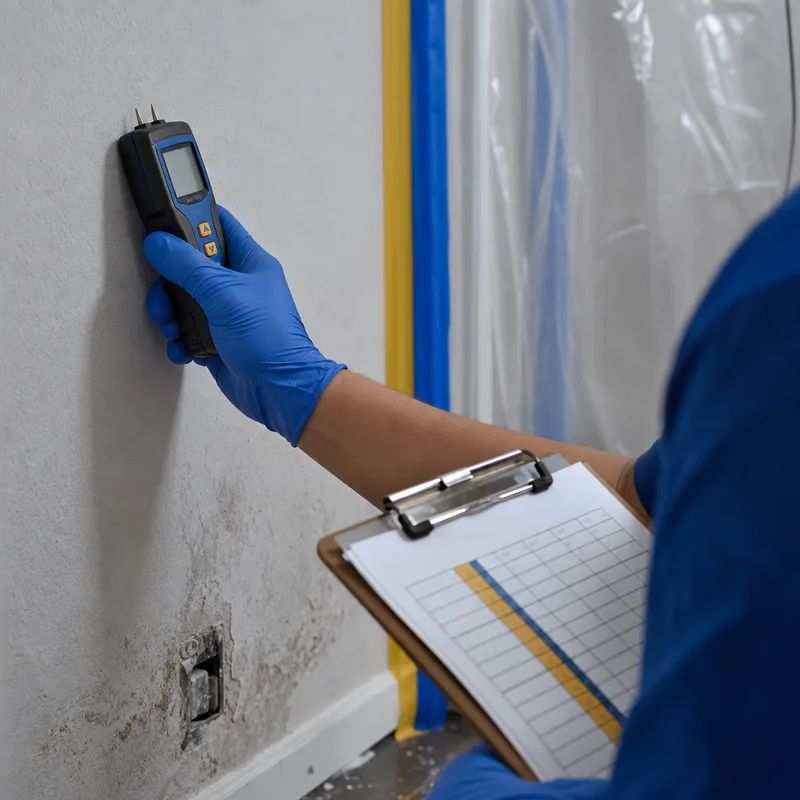
If this matches your situation, the next step is usually a professional assessment to support your claim.

Get a professional assessment →

Likely excluded

A gradual or long-term leak, ongoing humidity, or deferred maintenance are typically treated as maintenance issues, not sudden accidents — and standard homeowners policies usually don’t cover maintenance-type damage. Policies usually won’t cover damage from gradual leaks, and mold is often listed as its own separate exclusion.

Your situation matches the kind of gradual or maintenance-related cause that’s typically excluded from a standard policy. That doesn’t mean there’s nothing you can do — see the checklist below for what to ask your insurer, and the next steps either way.

Source: Texas Department of Insurance (tdi.texas.gov), National Association of Insurance Commissioners (naic.org).

Even if insurance doesn’t cover this one, a professional assessment still tells you what you’re dealing with and what it will cost.

See remediation cost information →

Not covered by a standard homeowners policy

Standard homeowners insurance excludes flood damage entirely — storm surge, bayou or creek overflow, and heavy rainwater runoff all fall under this exclusion. A separate NFIP or private flood policy is required for that coverage. If mold results from a flood, it may be covered only under a flood policy, and only if the mold is directly attributable to the flood.

Standard homeowners insurance doesn’t cover flood damage, mold included. If you already have a separate flood policy, ask your insurer whether your mold is directly attributable to the flood. If you don’t have flood coverage, note that a newly purchased flood policy typically has a waiting period before it takes effect, so it isn’t a same-day option for an event that’s already happened.

Source: National Association of Insurance Commissioners (naic.org), Texas Department of Insurance (tdi.texas.gov), Insurance Information Institute (iii.org).

Whether or not this ends up covered, the mold itself still needs addressing — here’s what that looks like.

Find out what you’re dealing with →

Covered vs. typically excluded, at a glance

Cause of moisture/moldTypically covered?Source
Burst or frozen pipeUsually yesTexas DOI
Storm-damaged roof, sudden leakUsually yesTexas DOI, III
Appliance overflow (washer, dishwasher, water heater)Usually yesTexas DOI
Firefighting waterUsually yesIII
Slow, ongoing plumbing leakUsually noTexas DOI
Long-term humidity / poor ventilationUsually noNAIC
Deferred maintenance (neglected roof, known unfixed leak)Usually noNAIC
External flooding (storm surge, bayou overflow, heavy rain runoff)No under a homeowners policy — only under a separate flood policy, and only if directly attributable to the floodNAIC, Texas DOI, III

If you’re filing a claim: a documentation checklist

  1. Report the water damage to your insurer as soon as possible. You usually must report hidden water damage within days after you first see it.
  2. Photograph or video the damage before making any repairs, and don’t throw away damaged items until your adjuster has seen them.
  3. Make only temporary protective repairs (a tarp on a roof, covering a broken window) — not permanent repairs — until your insurer has seen the damage. Keep receipts for materials.
  4. Stop the water source and start drying as soon as it’s safe to do so. Mold can start growing within about a day of a leak, so waiting to act can work against you even on a claim that would otherwise be covered.
  5. If you need mold remediation, make sure the professional is state-licensed. See our 10 Questions to Ask Before Hiring a Mold Company checklist for how to check.
  6. Get an inspection and a certificate showing the mold was removed and the cause was fixed. Mold professionals must provide this certificate — keep it with your claim records.
  7. Ask your insurer whether mold cleanup and testing is included, or needs to be added. Many policies don’t include this by default. Some insurers let you add coverage for cleanup caused by a covered loss — check your own policy’s declarations page, or ask your agent or insurer directly what your specific options are.

What to do if a claim is denied or disputed

If your insurer denies or disputes a mold claim, ask for the specific policy language they’re relying on, in writing. You can request a re-inspection if you believe the denial was based on an incomplete picture of the damage. If you believe your claim was handled unfairly, the Texas Department of Insurance — the state agency that regulates insurers in Texas — accepts consumer complaints and can look into it. This is general information, not legal advice; for a dispute involving real money, consider speaking with a licensed insurance professional or attorney about your specific policy.

Frequently asked questions

Does insurance cover mold from a leaky pipe?

If the pipe burst suddenly, the resulting mold is often covered as a consequence of that covered event. If it was a slow leak that went on for a while, it’s usually treated as a maintenance issue and excluded.

Does flood insurance cover mold?

Only if you already have a separate flood policy — standard homeowners insurance never covers flood damage — and only if the mold is directly attributable to the flood.

Do I need to call my insurer before or after I start cleanup?

Call as soon as it’s safe to do so, ideally before you start major cleanup — but don’t wait to remove standing water and begin drying, since mold can start within about a day. Document everything with photos first.

What if my insurer says my claim is denied?

Ask for the specific policy language in writing. The Texas Department of Insurance handles consumer complaints about insurers if you believe your claim was handled unfairly.

Not sure which category your situation falls into? A professional assessment can help either way.

Call (346) 584-5885