
HOUSTON CLIMATE & MOLD
Why Is Mold So Common in Houston Homes?
Houston’s humid Gulf Coast climate explained — and what actually helps.
Mold needs moisture to grow, and Houston’s climate provides that moisture far more consistently than most of the country. This guide is part of the resources on Houston Mold Treatment, explaining why local humidity plays such a large role in mold problems here.
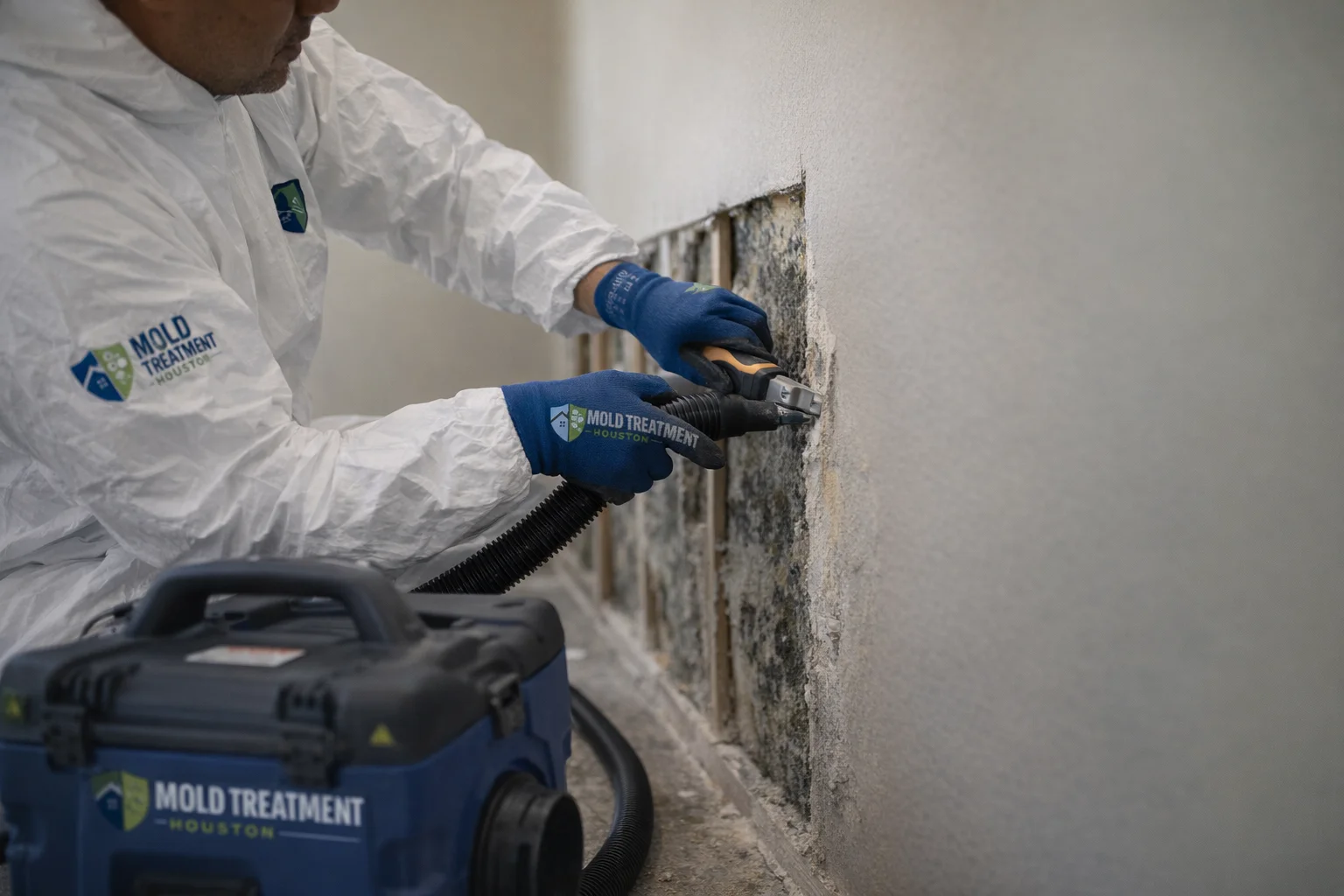
Houston’s Climate: A Brief Overview
Houston’s weather has been tracked by the National Weather Service’s Houston/Galveston forecast office since observations began in the 1880s, with the official station located at Houston Intercontinental Airport since 1969. Houston sits on the Gulf Coast, a region generally characterized by high humidity and a long warm season — conditions that keep moisture in the air for much of the year rather than only during isolated wet spells.
Why Moisture Matters More Than the Mold Itself
According to the EPA, mold control is fundamentally moisture control — mold cannot grow without water, and it can begin growing on a wet surface within 24–48 hours. In a climate where outdoor humidity is consistently high, indoor surfaces have more opportunities to stay damp for longer, whether from condensation, minor leaks, or simply high ambient humidity working its way indoors.
How This Plays Out in Houston Homes
- Air conditioning runs longer. A hot, humid climate means AC systems operate for a large part of the year, which means more opportunity for condensation inside those systems if drainage or maintenance issues occur. See our guide on HVAC and AC-related mold for the mechanics of this.
- Humidity re-enters faster after a problem is fixed. In a drier climate, a home that dries out after a leak tends to stay dry. In a consistently humid climate, indoor humidity can climb back up more easily, which is one reason mold can return even after cleaning if the underlying moisture and humidity conditions aren’t addressed — see our page on why mold keeps coming back.
- Storms and flooding add sudden, large moisture events on top of already-humid baseline conditions. See our post-flood water damage checklist.
What Actually Helps
The EPA’s guidance is straightforward: control moisture, and mold growth is controlled with it. Keeping indoor humidity in a reasonable range, drying wet materials quickly (within 24–48 hours), and fixing leaks promptly all reduce the conditions mold needs — regardless of how humid it is outside. If you’re dealing with a mold problem or want to understand your home’s risk, our guide to mold inspection covers what that process looks like.
Frequently Asked Questions
This page is provided for general informational purposes based on National Weather Service and EPA guidance.
Reviewed by Houston Mold Treatment
Local mold remediation specialists serving Houston and surrounding communities.
Related Reading
Concerned about mold in your Houston home? We’re happy to help connect you with the right next step.